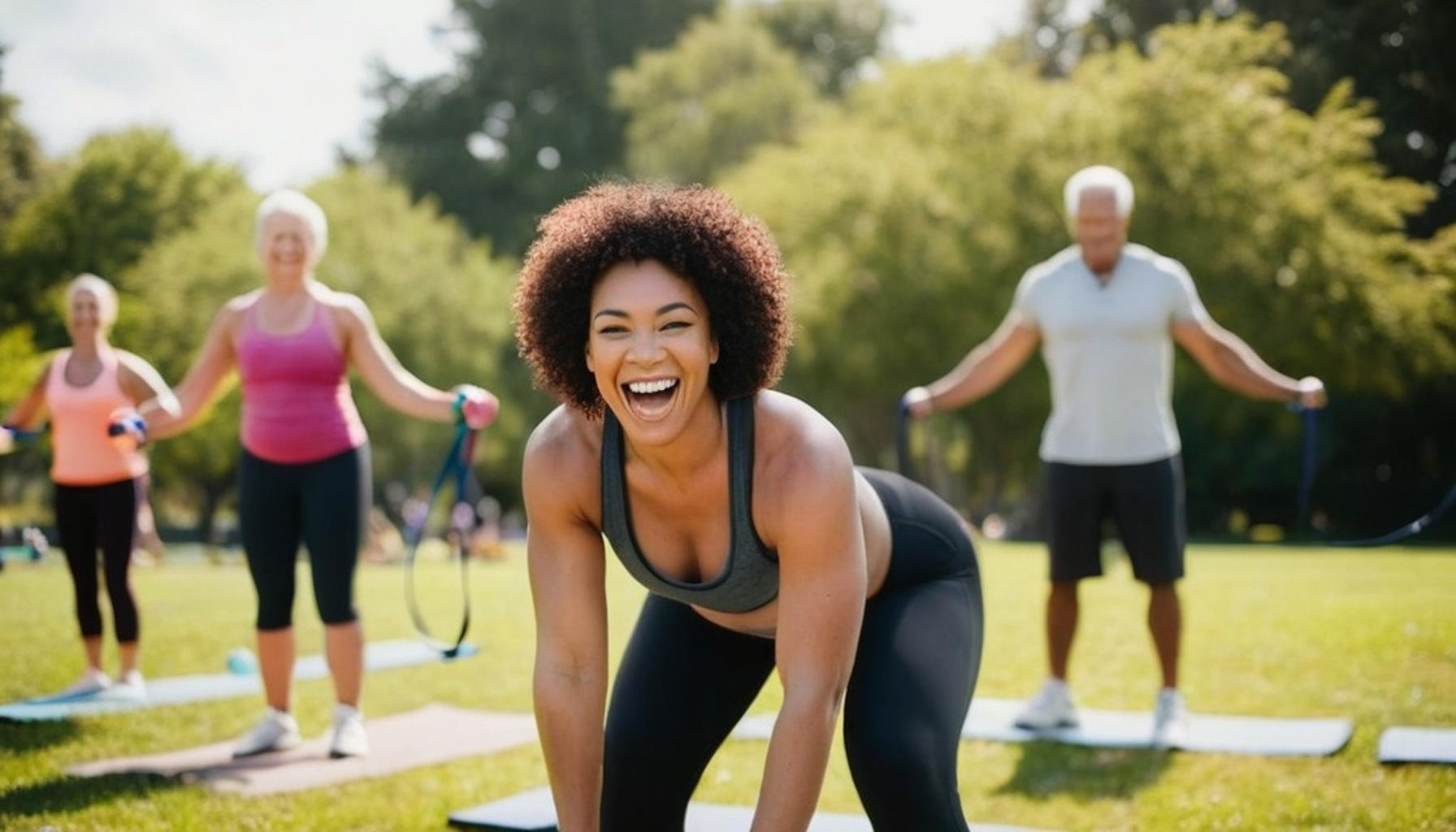
The Role of Short Workouts in Busy Lifestyles: Finding Balance Through Efficient Exercise

Squeezing Fitness Into a Packed Schedule
Between back-to-back Zoom calls, school pickups, and a never-ending inbox, finding time to exercise can feel impossible. Yet short workouts in busy lifestyles are proving that fitness doesn’t require hours at the gym. Americans are discovering that just a few focused minutes can deliver real results, and gyms from Los Angeles to New York City are adjusting their class schedules to reflect this shift.
Research from the American Heart Association suggests that even 10-minute bursts of activity can improve cardiovascular health when done consistently. This shift in thinking is changing how people approach exercise time management altogether, and fitness apps like Peloton and Nike Training Club have reported surges in demand for shorter, high-efficiency workout content.
Why Efficient Exercise Is Gaining Popularity
Modern life demands flexibility, and traditional hour-long workout routines often don’t fit. That’s why fitness for busy people is trending toward shorter, smarter sessions. Many corporate wellness programs, including those at major companies like Google and Microsoft, now offer on-site micro-workout breaks to encourage employees to move throughout the day rather than sitting for hours at a stretch.
Consider these growing options that busy Americans are turning to:
- High-Intensity Interval Training (HIIT) sessions lasting 15-20 minutes
- Bodyweight circuits done during lunch breaks
- Quick morning routines before the workday begins
- Micro-workouts squeezed between meetings
These quick workout routines aren’t just convenient—they’re backed by science showing measurable improvements in strength, endurance, and mental clarity. A 2022 study published in the Journal of Physiology even found that short, intense exercise sessions can trigger similar metabolic benefits as longer, moderate-intensity workouts, challenging the long-held belief that more time equals better results.
Can You Really Balance Work and Fitness?
The idea of balancing career demands with physical health often feels like a losing battle. However, thousands of professionals across the country are proving otherwise, one short session at a time. From remote workers in Austin squeezing in kettlebell swings between calls to nurses in Chicago doing stairwell sprints on break, the movement toward efficient fitness is reshaping daily routines nationwide.
Fitness trainers are also adapting, designing programs specifically for people with unpredictable schedules. Personal trainers now emphasize consistency over duration, arguing that showing up for ten focused minutes daily beats an occasional hour-long session squeezed in once a week.
This article explores how strategic, efficient exercise can reshape your relationship with fitness—without requiring a complete lifestyle overhaul. The answer may be simpler than you think, and for many Americans, it starts with just one small, intentional step toward movement each day.
SEE ALSO: Balancing Strength Training and Cardio: A Holistic Approach to Fitness
Skeptics often assume that shorter workouts must mean weaker results. However, a growing body of research is dismantling that assumption entirely, and the implications are reshaping how millions of Americans think about squeezing exercise into packed schedules.
A study conducted by McMaster University found that just one minute of all-out effort, embedded within a 10-minute workout, produced similar improvements in insulin sensitivity and cardiorespiratory fitness as 45 minutes of moderate continuous exercise. That’s a staggering efficiency ratio, and it’s precisely why short workouts in busy lifestyles are no longer viewed as a compromise—they’re being recognized as a legitimate strategy backed by hard science.
The mechanism behind this comes down to intensity. When muscles work harder in shorter bursts, the body activates fast-twitch muscle fibers and elevates heart rate more rapidly than steady, low-effort movement. This creates what exercise physiologists call an “afterburn effect,” or excess post-exercise oxygen consumption (EPOC), which means the body continues burning calories at an elevated rate even after the workout ends. Some studies suggest this afterburn can persist for up to 24 hours, depending on the intensity and duration of the session, turning a quick morning routine into a metabolic advantage that lasts well into the evening.
Researchers at institutions like the University of Michigan have also pointed to hormonal responses as part of the puzzle. High-intensity intervals trigger a spike in human growth hormone and catecholamines, chemicals that play a direct role in fat oxidation. This means the body isn’t just burning calories during the workout itself, it’s being primed to burn fat more efficiently throughout the rest of the day.
What Makes a Workout “Efficient” Anyway?
Efficient exercise isn’t simply about doing less. It’s about maximizing output within a limited timeframe. Trainers across the country, from boutique studios in Miami to CrossFit gyms in Denver, are structuring sessions around a few core principles that separate a truly efficient workout from a rushed one.
- Compound movements that engage multiple muscle groups simultaneously, such as squats to overhead press
- Minimal rest periods to keep heart rate elevated throughout the session
- Progressive overload applied in smaller, more frequent doses
- Functional exercises that mimic real-life movement patterns
This approach explains why quick workout routines built around circuits or supersets often outperform longer, less-structured sessions at the gym. It’s not about how long you’re moving—it’s about how deliberately you’re moving. A trainer in Austin, for example, might design a 12-minute kettlebell circuit that hits the shoulders, glutes, and core in rapid succession, leaving little room for the wasted minutes typically spent scrolling on a phone between machine sets.
Interestingly, this style of training also appears to reduce injury risk for time-crunched exercisers. Because sessions are shorter, form tends to stay sharper from start to finish, whereas longer workouts can lead to fatigue-driven technique breakdown in the final stretch.
The Data Behind Daily Consistency
Perhaps the most compelling argument for fitness for busy people comes from behavioral data rather than physiological data. According to a 2023 survey by the Physical Activity Council, Americans who exercised for 15 minutes or less, five to six days a week, reported higher adherence rates than those attempting longer sessions just once or twice weekly.
This finding reshapes the conversation around exercise time management. Instead of asking “how much time do I have today?”, many trainers now suggest asking “how can I make the most of the time I do have?” That subtle shift in mindset appears to be the real key to helping people balance work and fitness over the long term, rather than viewing exercise as an all-or-nothing pursuit. The data suggests that consistency, not duration, may ultimately be the strongest predictor of long-term success.

Key Strategies for Fitting Short Workouts in Busy Lifestyles
Balancing work, family, and personal time often leaves little room for exercise. Yet research shows that short workouts in busy lifestyles can deliver measurable fitness gains without demanding hours at the gym. The table below breaks down practical approaches to efficient exercise, helping readers understand how quick workout routines fit into daily schedules.
| Category | Key Benefits |
|---|---|
| HIIT Sessions (10-15 min) | Boosts metabolism and burns calories long after the session ends |
| Micro-Workout Breaks | Improves focus and supports exercise time management during work hours |
| Bodyweight Circuits | Requires no equipment, ideal for fitness for busy people anywhere |
| Active Commuting | Turns travel time into calorie-burning opportunity effortlessly |
| Desk-Based Stretching | Helps balance work and fitness while reducing muscle stiffness |
Each method above proves that consistency, not duration, drives results. Studies indicate that even seven-minute workouts performed regularly can improve cardiovascular health and muscle tone. Choosing the right combination depends on personal schedules, energy levels, and specific fitness goals.
YOU MAY ALSO LIKE: Integrating Mindfulness into Your Exercise Routine for Enhanced Well-Being
Real-World Strategies for Making Every Minute Count
Walk into any office building in Chicago or Seattle before 9 a.m., and you might notice something unusual: employees doing squats in stairwells or lunges in parking garages. This isn’t a passing trend. It’s a direct response to how short workouts in busy lifestyles are being integrated into corporate wellness culture across the country.
Companies like Google and Johnson & Johnson have already built “movement breaks” into employee schedules, some as brief as five minutes, recognizing that micro-sessions of activity can offset the health risks associated with prolonged sitting. A 2022 study published in the British Journal of Sports Medicine found that breaking up sedentary time with just two to three minutes of movement every 30 minutes significantly reduced blood sugar spikes and improved cardiovascular markers, even among participants who exercised minimally otherwise.
What makes this shift particularly compelling is the growing body of evidence suggesting that consistency, rather than duration, might be the real driver of long-term health outcomes. Researchers at institutions like Stanford and the University of Michigan have begun tracking employees who adopt these micro-movement habits, finding measurable improvements in energy levels, mood, and even reported productivity. For companies footing the bill on healthcare premiums, that data carries real financial weight, which helps explain why so many are investing in workplace wellness infrastructure that didn’t exist a decade ago.
The Rise of the “Exercise Snack”
Fitness experts have coined a term for this phenomenon: the exercise snack. Unlike a full meal of a workout, an exercise snack is a small, potent dose of movement, think 20 push-ups between Zoom calls or a brisk two-minute stair climb during a lunch break.
Dr. Martin Gibala, one of the researchers behind the influential McMaster interval studies, has publicly advocated for this approach, noting that accumulated activity throughout the day may rival the benefits of a single structured session. This insight is particularly relevant for anyone struggling to balance work and fitness, since it removes the pressure of finding one uninterrupted block of time.
Some examples of exercise snacks gaining popularity include:
- Bodyweight squats or wall sits during phone calls
- Resistance band rows kept at a desk for quick upper-body activation
- Brief walking intervals around the block between meetings
- Stair climbing repeats in office buildings or apartment complexes
What’s notable is how these habits are spreading beyond corporate settings into everyday American life. Parents juggling school drop-offs and remote work have started incorporating exercise snacks into carpool lines, while college students squeeze in quick sets between lecture halls. The appeal lies in its accessibility: no gym membership, no special equipment, and no need to change clothes.
Technology’s Role in Exercise Time Management
Fitness apps have also adapted to this shift. Platforms like Peloton, Apple Fitness+, and Nike Training Club now offer libraries of sessions specifically labeled under 15 minutes, a direct response to user demand for quick workout routines that fit into fragmented schedules.
Wearable technology has amplified this trend further. Devices like the Apple Watch and Whoop band now track “activity spikes” throughout the day rather than focusing solely on formal workout sessions, reinforcing the idea that movement accumulated in short bursts holds genuine physiological value.
Some fitness trackers have gone a step further, sending real-time nudges when users have been sedentary too long, essentially functioning as digital accountability partners. This kind of behavioral reinforcement, paired with visible data trends over weeks and months, has proven surprisingly effective at changing habits that once felt impossible to break.
This technological reinforcement matters because it validates something many time-strapped Americans have suspected all along: that rigid, hour-long gym sessions aren’t the only path to measurable fitness for busy people. Instead, a flexible, snack-sized approach to movement, backed increasingly by both data and design, is proving to be a sustainable alternative for those navigating demanding careers, family obligations, and everything in between.
YOU MAY ALSO LIKE: Mindfulness and Movement: How Yoga Can Enhance Your Overall Well-Being
Rethinking What Fitness Success Really Looks Like
The evidence is clear: short workouts in busy lifestyles are no longer a compromise but a legitimate strategy backed by science, technology, and real-world adoption. From corporate stairwells in Chicago to carpool lines in suburban Ohio, Americans are proving that fitness doesn’t require a two-hour gym block to be effective.
What began as a workaround for time-strapped professionals has evolved into a broader cultural shift. Researchers, employers, and tech developers are aligning around the same conclusion: efficient exercise, delivered in small, consistent doses, can rival traditional workout structures in measurable health outcomes.
This matters because it removes a major psychological barrier. For years, many people avoided exercise altogether, believing that anything less than a full session wasn’t worth the effort. That mindset is fading fast.
Consider the bigger picture emerging from this trend:
- Micro-workouts improve cardiovascular and metabolic markers, according to peer-reviewed studies
- Wearable data is validating the impact of movement accumulated throughout the day
- Employers are financially incentivized to support these habits, reducing long-term healthcare costs
- Quick workout routines are becoming mainstream fitness app offerings, not niche add-ons
Looking ahead, the concept of exercise time management may reshape how gyms, employers, and even city planners think about physical activity. Expect to see more stairwell signage, more app features built around five-minute sessions, and more workplace policies that treat movement as a productivity tool rather than a personal indulgence.
Ultimately, the goal isn’t to abandon longer workouts entirely, but to recognize that consistency often beats intensity. For anyone trying to balance work and fitness, the message is refreshingly simple: movement counts, no matter how small the window. In a culture obsessed with optimization, this might be the most sustainable fitness revolution yet.
Frequently Asked Questions
How effective are short workouts in busy lifestyles compared to longer gym sessions?
Short workouts of 10 to 20 minutes can be highly effective when they include high-intensity intervals or compound movements that elevate your heart rate quickly. Studies show these sessions can improve cardiovascular health, strength, and metabolism similarly to longer workouts if performed consistently. The key is intensity and consistency rather than duration alone.
What is the best time to fit short workouts into a busy daily schedule?
Many people find success squeezing in short workouts first thing in the morning before daily responsibilities take over, or during lunch breaks to reset energy levels. Others prefer breaking up their day with 5 to 10 minute movement snacks between meetings or tasks. The best time is whichever slot you can realistically commit to every day without excuses.
Can short workouts in busy lifestyles actually help with weight loss?
Yes, short workouts can support weight loss, especially when combined with proper nutrition and consistency throughout the week. High-intensity interval training (HIIT) in particular burns significant calories in a short time and boosts metabolism for hours afterward. Pairing brief daily sessions with an active lifestyle outside the gym amplifies these results.
How many days a week should I do short workouts to see real results?
Most fitness experts recommend aiming for at least 4 to 5 short workout sessions per week to see noticeable improvements in strength and endurance. Consistency matters more than intensity when working with limited time, so daily 10 to 15 minute sessions often outperform sporadic longer workouts. Rest days should still be included to allow proper recovery.
What types of exercises work best for quick workouts when I have no equipment?
Bodyweight exercises like squats, push-ups, lunges, and planks are ideal for quick, equipment-free workouts because they engage multiple muscle groups at once. Adding jumping jacks or mountain climbers can increase the cardiovascular benefit within a short timeframe. These moves can be combined into a simple circuit repeated for 10 to 15 minutes for a full-body burn.
How do short workouts in busy lifestyles help with stress and mental health?
Even brief bursts of exercise trigger the release of endorphins, which help reduce stress and improve mood almost immediately. A quick 10-minute workout can also serve as a mental reset during a hectic workday, improving focus and productivity afterward. Over time, consistent short workouts contribute to better sleep and lower anxiety levels.

Linda Carter
Linda Carter is a writer specializing in healthy habits and balanced living. With extensive experience helping readers build sustainable routines, she shares practical guidance on nutrition, physical activity, quality sleep, stress management, and emotional well-being. Her goal is to offer simple, accessible strategies that inspire people to care for their health and enjoy a more balanced life.