The Connection between Puzzles and Social Skills Development in Groups
Uncovering the Power of Puzzles
Puzzles are more than just a pastime; they serve as an intriguing platform for social skills development within groups. Engaging in puzzle-solving activities fosters collaboration and communication, essential elements in any social setting. This connection raises important questions about how puzzle interactions can enhance interpersonal relationships.
The Role of Teamwork
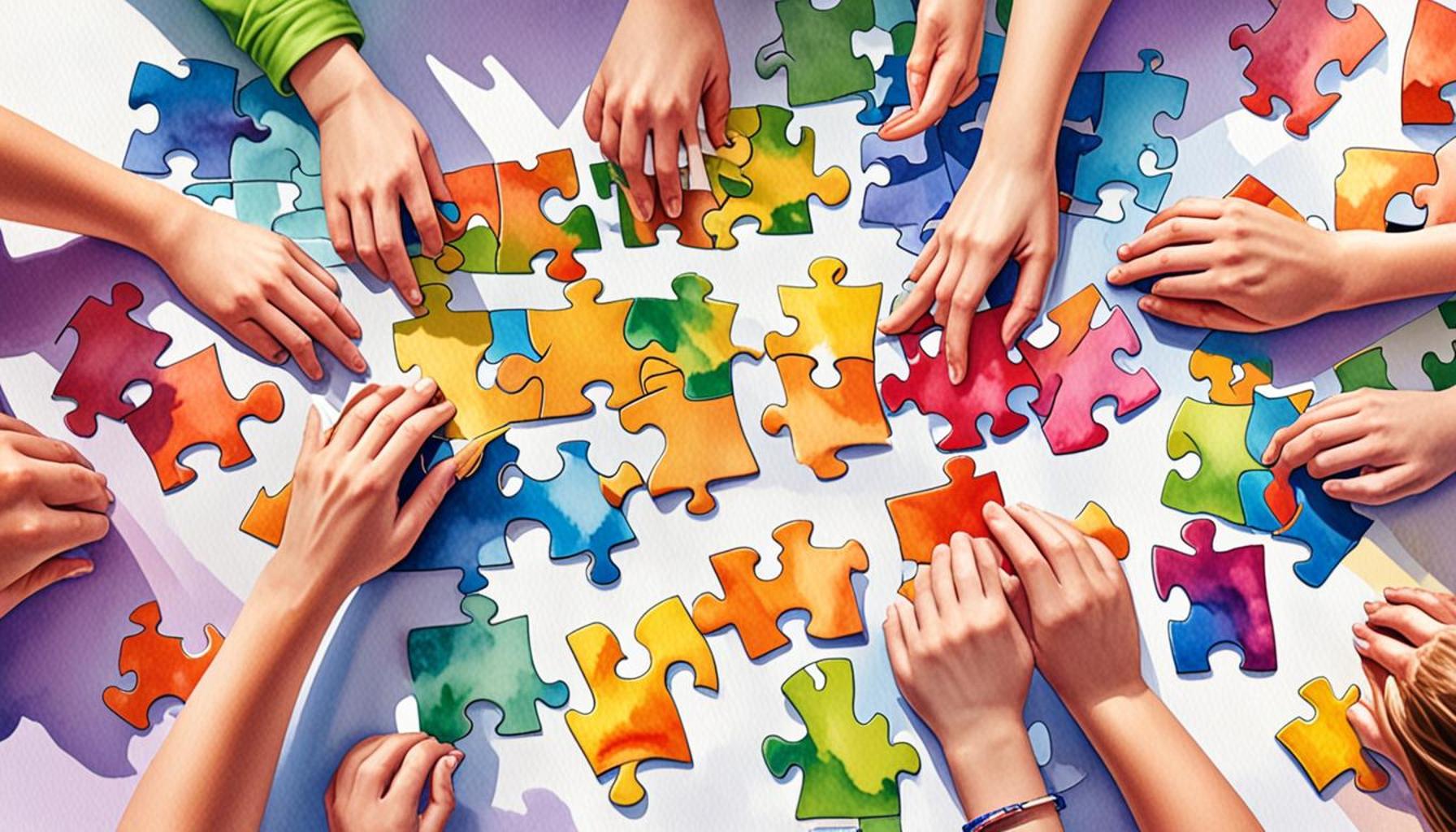
When groups tackle puzzles together, they naturally engage in teamwork. Effective teamwork is essential not only in casual settings but also in professional environments. Here are some key aspects of how puzzles facilitate this collaboration:
- Communication: Participants must articulate thoughts and strategies clearly to succeed in problem-solving. For instance, during a jigsaw puzzle, teammates might discuss which pieces might fit where, encouraging open dialogue and shared ideas.
- Problem-solving: Working collaboratively helps develop critical thinking skills. Studies have shown that engaging in complex puzzles, like escape room challenges, can sharpen analytical abilities and promote innovative thinking among participants.
- Conflict resolution: Differences in opinion can lead to healthy discussions. When a disagreement arises over the best approach to a puzzle, it teaches individuals how to negotiate and find common ground, skills that are just as valuable in personal and professional relationships.
Benefits of Puzzle Engagement
The benefits of incorporating puzzles in group settings extend beyond mere entertainment. Consider the following advantages:
- Enhanced Cohesion: Successfully completing a puzzle strengthens group bonds. Think of family game nights or team-building retreats at corporate offices—these bonding experiences often rely on puzzles to bring people together.
- Boosted Confidence: Individuals gain confidence in their contributions and ideas. For example, a team member who suggests a unique strategy that leads to solving the puzzle feels validated and empowered, which translates into greater participation in future discussions.
- Social Awareness: Participants become more attuned to the dynamics within the group. Engaging in puzzles allows individuals to observe how various personalities interact and contribute, enhancing their understanding of social cues and personal relationships.
Through the lens of puzzle-solving, it becomes clear that these seemingly simple activities hold profound potential for social skills enhancement. They invite individuals into a shared experience, paving the way for deeper connections and understanding. From community gatherings to corporate workshops, incorporating puzzles can transform how we perceive teamwork, making it a vital tool for fostering collaboration in any group dynamic.
To further explore the impact of puzzles on social dynamics, consider participating in local puzzle competitions or community outreach programs that incorporate problem-solving activities. The insights gained from these experiences may reveal just how valuable puzzles can be in building lasting relationships and improving communication skills.
EXPLORE MORE: Click here to unlock the secrets of logical puzzles
Unlocking Collaborative Potential
As groups unite over puzzles, they forge connections that can greatly enhance their social skills. Collaborative activities, especially those involving puzzles, require participants to navigate interpersonal dynamics, often leading to meaningful growth in communication and cooperation. This section delves into how engaging with puzzles can transform group interactions into opportunities for personal and communal development.
Fostering Communication Skills
Effective communication lies at the heart of teamwork, and puzzles serve as an excellent medium for honing these skills. When members of a group work on a puzzle, they engage in conversations that not only clarify the task at hand but also encourage the sharing of ideas and perspectives. These discussions nurture a supportive environment where individuals feel valued. Key communication benefits that arise from puzzle-solving include:
- Articulation of Thoughts: Puzzles necessitate that players express their ideas clearly. For example, while assembling a complex 3D puzzle, a group member might suggest a strategy for tackling the most challenging sections, prompting others to contribute their insights.
- Active Listening: Participants must listen intently to each other’s suggestions to avoid miscommunication. By acknowledging different viewpoints, individuals enhance their ability to understand and process information from multiple sources.
- Feedback Mechanism: Constructive feedback often emerges as teammates evaluate each other’s contributions. This exchange of ideas fosters an atmosphere of openness, encouraging individuals to refine their arguments and improve their interaction techniques.
Building Trust in Groups
The challenge posed by puzzles can also enhance trust among group members. Trust is a foundational element in any relationship, and puzzle-solving provides various opportunities to cultivate it. As teams face obstacles together, they learn to rely on each other’s strengths and capabilities. Some key components of trust development through puzzles include:
- Shared Goals: Working towards a common objective strengthens group unity. Completing a complex puzzle requires collective effort, bonding members over mutual success.
- Reliability: As team members witness one another contributing consistently to the task, their faith in each other’s reliability grows. This confidence leads to a more cohesive working environment.
- Positive Reinforcement: Celebrating small victories during puzzle-solving fuels motivation and reinforces the belief that members can depend on one another, fostering a spirit of teamwork.
The connection between puzzles and social skills development in groups is both fascinating and beneficial. By providing a structured opportunity for interaction, puzzles encourage participants to explore new ways of communicating, build trust, and collaborate effectively. The insights gained from these experiences may provide a roadmap for improved relationships, whether in a familial or professional context.
For organizations and communities aiming to enhance social cohesion, introducing puzzle-solving activities can be a game changer. Workshops, team-building exercises, or even social clubs centered around puzzles can create a vibrant atmosphere conducive to personal and social growth. As teams increasingly rely on effective collaboration, these engaging activities may hold the secret to unlocking the full potential of interpersonal dynamics.
The Connection between Puzzles and Social Skills Development in Groups
Engaging in puzzle solving within groups presents a unique and beneficial opportunity to enhance social skills. This practice encourages individuals to collaborate, communicate, and build upon each other’s strengths, thus fostering an environment where teamwork thrives. When participants tackle puzzles together, they cultivate essential skills such as problem-solving and critical thinking, which are paramount in both social and professional contexts.
Puzzles inherently require a level of cooperation and discussion. As members share their thoughts and approaches towards the solution, they practice active listening and gain insights into different perspectives. This exchange encourages respect for differing opinions while reinforcing group cohesion, making the experience both educational and enjoyable.
Furthermore, the act of solving challenges together can strengthen interpersonal relationships among participants. Opportunities for laughter and shared victories contribute to a positive atmosphere, often leading to deeper friendships. This social bonding can be particularly beneficial in educational settings, where students will carry these skills beyond the classroom.
To illustrate these advantages, consider how escape rooms or collaborative board games, both of which involve puzzles, are used as team-building exercises in corporate environments. They help bridge the gap between individual talents and collective goals, highlighting the correlation between play and serious learning.
| Social Skills | Benefits |
|---|---|
| Teamwork | Promotes cooperation and unity among group members. |
| Communication | Encourages effective dialogue and idea sharing, fostering better understanding. |
As we explore the intersection of puzzles and social skills further, it becomes evident that such collective activities not only deepen cognitive abilities but also enrich personal connections, making them a vital part of group dynamics.
DISCOVER MORE: Click here to enhance your problem-solving skills
Cultivating Problem-Solving and Critical Thinking
Working through puzzles demands not only patience but also an array of cognitive skills that bolster group dynamics. As participants grapple with challenges, they cultivate their problem-solving abilities, enhancing not just their individual skills but also their collective efficacy as a unit. The engagement involved in puzzling creates an environment ripe for developing these essential capabilities, which can have lasting implications in both social settings and professional environments. Here are some ways group puzzle-solving contributes to this critical aspect of development:
Encouraging Collaborative Problem-Solving
Puzzles often present multi-layered challenges requiring diverse perspectives for resolution. In a group setting, participants must brainstorm and collaborate to uncover solutions. This fosters a culture of synergy where the collective intelligence often surpasses individual reasoning. Notable outcomes include:
- Diverse Perspectives: Each group member brings unique experiences and viewpoints to the table. By encouraging open dialogue, participants can combine their insights, leading to innovative solutions that may not emerge in isolation.
- Negotiation Skills: Disagreements may arise during puzzle-solving, pushing members to negotiate and arrive at a consensus. This practice enhances their ability to communicate differing opinions respectfully and effectively, a vital skill both in and out of the workplace.
- Strategic Thinking: The complexity of puzzles hones strategic thinking as group members must prioritize tasks and allocate resources efficiently. This is crucial preparation for real-world problem-solving, where time management and resource allocation are often key to success.
Enhancing Emotional Intelligence within Groups
Puzzle-solving isn’t solely about critical thinking; it also promotes emotional intelligence (EI), which plays a crucial role in interacting harmoniously with others. As groups work together on puzzles, they experience emotional responses that can enhance their EI. Important aspects include:
- Empathy Development: Engaging collaboratively allows individuals to better understand their peers’ emotional cues and respond appropriately, deepening their ability to empathize with others.
- Conflict Resolution: Tension may arise when team members have different approaches to solving puzzles. Navigating these conflicts successfully fosters resilience and cultivates smoother interpersonal relationships.
- Stress Management: Puzzles can sometimes create moments of frustration. Learning how to manage stress in these situations equips group members with coping mechanisms that prove beneficial in high-pressure scenarios outside of puzzle-solving.
Research indicates that participation in group activities, such as puzzles, significantly affects the development of social skills, yielding positive effects that extend beyond the immediate context. For instance, a study from the American Psychological Association highlights that engaging in cooperative problem-solving can lead to improved negotiation skills and heightened emotional awareness. These are invaluable attributes in diverse settings, whether they entail building strong friendships or enhancing team collaboration in the workplace.
Moreover, organizations looking to bolster team dynamics may consider incorporating puzzle-solving exercises into their training regimens. By setting aside time for group activities involving puzzles, teams can enhance their cooperative abilities and create a workplace culture grounded in mutual respect and shared objectives.
DISCOVER MORE: Click here to dive into puzzle-solving strategies
Conclusion
The exploration of the connection between puzzles and social skills development in groups reveals a compelling intersection where cognitive engagement meets interpersonal interaction. As groups tackle puzzles, they not only enhance their critical thinking and problem-solving abilities but also cultivate essential social skills such as empathy, negotiation, and emotional intelligence. The collaborative nature of puzzle-solving promotes a harmonious environment that values diverse perspectives, enabling participants to create innovative solutions that reflect a synthesis of ideas rather than isolated insights.
Moreover, the challenges encountered during group puzzle-solving pave the way for improved conflict resolution and stress management, vital skills that transcend the activity and resonate in everyday scenarios—be it at work, in friendships, or within family dynamics. Given the significant impact of such group activities on social skills development, it becomes increasingly important for educational institutions and organizations alike to incorporate puzzle-driven initiatives into their curriculums and team-building exercises.
In an era where teamwork and emotional acumen are paramount, recognizing the value of puzzles as a tool for social development offers a fresh perspective on collaborative growth. The data speaks volumes; by nurturing these skills through engaging, enjoyable activities, groups can enhance their overall effectiveness, leading to a more interconnected and supportive community. As research continues to unfold in this area, the call to action is clear: embrace puzzles not just as recreational pastimes but as pivotal elements in fostering the social skills needed to thrive in today’s complex world.