Exploring the Relationship between Puzzles and Emotional Resilience in Children
The Role of Puzzles in Emotional Development
In a world where distractions abound and stressors loom large, children are navigating a complex landscape filled with academic pressures, social dynamics, and rapidly evolving technologies. As a result, fostering emotional resilience has become paramount. One intriguing avenue to support this development is through puzzles. These engaging activities not only serve as enjoyable pastimes, but they also play a pivotal role in enhancing children’s cognitive and emotional capacities.
Building Problem-Solving Skills
Puzzles are a rich resource for honing problem-solving skills. When children work on a jigsaw puzzle, for instance, they must analyze piece shapes, colors, and patterns, seeking to fit them together. This process encourages critical thinking—an essential skill that translates to real-life scenarios, from resolving conflicts to tackling academic challenges. Research demonstrates that children who regularly engage in logical games or puzzles often display enhanced reasoning capabilities in school settings, leading to better performance in subjects such as mathematics and science.
Developing Patience and Perseverance
In a fast-paced society that often champions instant gratification, patience becomes an invaluable attribute. Puzzles require children to focus and work steadily towards a solution, which can take time. As they navigate the frustration of fitting pieces together or realizing a mistake, they learn that success is often a gradual process. This ability to endure setbacks without giving up cultivates a strong sense of perseverance, which is crucial when facing life’s inevitable obstacles.
Boosting Self-Esteem
Moreover, the completion of a puzzle delivers a potent boost to a child’s self-esteem. This inherent reward of accomplishment can be particularly significant in a child’s developmental years. Each successful completion serves as a tangible reminder of their capabilities, reinforcing a positive self-image. This newfound confidence can spill over into other areas of their lives, empowering them to tackle new challenges with enthusiasm rather than fear.
Emotional Resilience Through Play
As children engage with puzzles, they not only practice cognitive skills but also cultivate emotional resilience. By learning to manage their feelings in the face of struggle—be it frustration, anxiety, or impatience—they become better equipped to handle future challenges in a variety of settings, whether that’s at home, in school, or during social interactions.
Given the increasing rates of mental health concerns among youth in the United States, recognizing the impact of puzzles as a tool for emotional resilience is essential. Integrating puzzles into a child’s routine could serve as a proactive measure in nurturing their mental well-being. By transforming challenges into enjoyable problem-solving experiences, we open paths for children to thrive as they navigate both the joys and turmoils of growing up.
This exploration into puzzles as a support for emotional health invites parents, educators, and caregivers to reconsider traditional methods of child development. As we deepen our understanding of their multifaceted benefits, it becomes apparent that something as simple as a puzzle can significantly shape the emotional landscape of a child’s life.
DISCOVER MORE: Click here to learn how brain teasers can enhance cognitive growth
The Cognitive Benefits of Puzzle-Solving
Engaging with puzzles serves as more than just a recreational pastime; it can significantly enhance a child’s cognitive development. When children confront the challenge of a puzzle, they engage in a series of elaborate mental processes that go beyond simple entertainment. These activities stimulate various cognitive functions, laying the groundwork for critical thinking and analytical capabilities.
Enhancing Cognitive Flexibility
Puzzles encourage cognitive flexibility, which is the ability to adapt one’s thinking to new and unexpected situations. For instance, when a child is working on a complex jigsaw puzzle, they may need to change strategies mid-way through the process. Perhaps they find certain pieces don’t fit as anticipated, prompting them to reassess and explore different configurations. This flexibility is vital not only in academics but in daily life, teaching children how to rethink their approaches when faced with new challenges.
Encouraging Focus and Attention
Another striking benefit of puzzle-solving is its ability to improve a child’s focus and attention span. The act of piecing together a puzzle requires concentration, which is often in short supply amid the numerous distractions of modern environments. Research indicates that children who practice activities demanding sustained attention, including puzzles, tend to perform better in school settings where focus is essential for learning. Through the puzzle-solving process, they learn to block out distractions, honing their ability to concentrate for extended periods.
Facilitating Social Connections
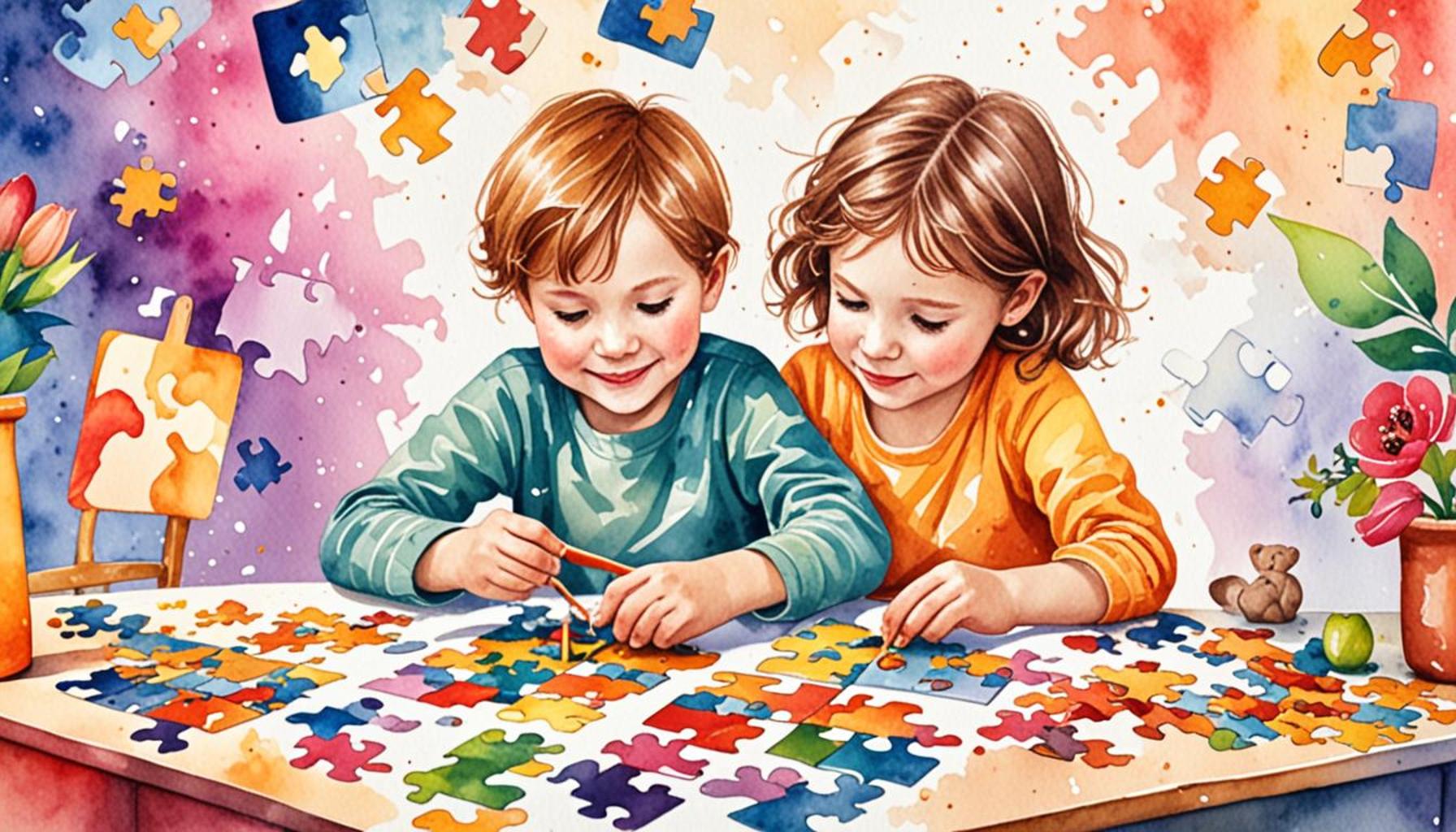
Puzzles can also foster valuable social skills as children engage with peers or family members during gameplay. Collaborative puzzle-solving encourages communication, negotiation, and teamwork. These social interactions are critical for emotional development, helping children navigate relationships and grasp the nuances of emotional expression. Here are some key social advantages of puzzle play:
- Teamwork: Working together towards a common goal cultivates a sense of community.
- Communication: Children learn to express their thoughts and ideas while discussing strategies.
- Conflict Resolution: Disagreements may arise, teaching children to find solutions amicably.
The multilayered benefits of engaging with puzzles extend from cognitive into the emotional realm, enhancing resilience in children. Emotional resilience is particularly crucial in a world where children face various pressures and challenges. Given the increased rates of anxiety and depression among young people, leveraging the power of puzzles as a constructive outlet is an effective measure for emotional and intellectual development. In fact, integrating regular puzzle time into a child’s routine is an accessible and enjoyable way to reinforce positive emotional growth while reaping cognitive benefits.
As the relationship between puzzles and emotional resilience becomes clearer, it becomes essential for parents, teachers, and caregivers to appreciate this connection. Encouraging puzzle play can be an empowering choice, establishing a strong foundation for children’s emotional and cognitive well-being as they navigate the complexities of growing up in today’s society.
Exploring the Relationship between Puzzles and Emotional Resilience in Children
Puzzles are more than just a form of entertainment; they are a powerful tool for enhancing children’s emotional resilience. The act of problem-solving, trial and error, and the eventual satisfaction of completing a puzzle can fortify a child’s ability to manage stress and adapt to challenges. Engaging with puzzles requires a level of focus and patience that cultivates these essential life skills.
| Category | Advantages |
|---|---|
| Cognitive Development | Puzzles enhance critical thinking, problem-solving, and spatial awareness skills. |
| Emotional Regulation | Completing puzzles teaches patience and perseverance, aiding in emotional control during adversity. |
Moreover, engaging with puzzles builds self-confidence. As children progress and successfully complete puzzles, they experience a sense of accomplishment and mastery, which translates into a more resilient emotional state. The patience developed from working through the ambiguity of difficult puzzles can prepare children to face life’s unexpected challenges.The role of familial support also amplifies this development. When parents or guardians participate with children, it creates an environment conducive to learning. This collaborative effort not only enhances communication skills but also strengthens the emotional bond, providing a safety net for emotional expression.Schools are increasingly recognizing the significance of puzzles in their curricula and are incorporating them into learning environments. This movement promotes not only academic skills but also essential emotional competencies that equip children to navigate both academic and personal challenges with greater resilience. Understanding these dynamics further assists in appreciating how simple activities can yield profound impacts on children’s emotional fortitude.
DISCOVER MORE: Click here to unlock the cognitive benefits of brain teasers
Building Emotional Resilience through Puzzle Challenges
While the cognitive advantages of puzzles are beneficial, the deeper connection to emotional resilience cannot be overlooked. Emotional resilience—defined as the ability to adapt to stress and adversity—can be cultivated through the act of overcoming challenges presented by puzzles. This process not only aids in emotional regulation but also instills a sense of accomplishment that contributes to a child’s self-esteem.
Developing Patience and Perseverance
One of the core emotional lessons children learn through puzzle-solving is patience. Completing a puzzle is rarely an immediate endeavor; it requires time and dedication. As children grapple with assembling complex pieces, they encounter situations where patience is necessary. This practice helps them understand that some challenges do not yield instant results, teaching them the value of persistence. Evidence suggests that children who practice patience regularly exhibit better emotional control, allowing them to handle frustration and setbacks more effectively.
Boosting Self-Efficacy
Puzzle-solving fosters a child’s sense of self-efficacy, the belief in their capabilities to achieve goals. When children successfully complete a puzzle, they experience a surge of accomplishment, reinforcing their confidence in their ability to handle difficulties. The notion of tackling and solving problems can empower children, making them more equipped to face obstacles outside the realm of puzzles. Research indicates that children with a strong sense of self-efficacy are more likely to pursue challenges enthusiastically, further enhancing their resilience.
Encouraging Emotional Awareness
Engagement with puzzles also allows children to explore their emotional responses to challenges, frustration, or excitement. As they interact with various puzzles, they may encounter moments of anger when a piece does not fit or joy upon finding the right match. These responses enable children to recognize and articulate their feelings, fostering emotional awareness. By understanding their emotions during puzzle-solving, children can apply these insights to navigate their feelings in real-world situations, paving the way for greater emotional intelligence.
Creating a Safe Space for Problem Solving
Additionally, puzzles provide a safe environment to embrace failure. The absence of a strict time limit or high stakes allows children to explore different strategies without fearing the consequences of making mistakes. This nurturing space ensures that they can learn from missteps, ultimately fostering a growth mindset. Children exposed to this kind of supportive learning environment tend to develop resilience as they begin to view challenges as opportunities for growth rather than insurmountable obstacles.
The positive impacts of puzzle-solving on emotional resilience highlight the importance of integrating these activities into children’s daily lives. As parents and educators recognize the emotional dimension of puzzles, they can encourage children to use these tools not only for cognitive advancement but as powerful mechanisms for emotional growth. This multifaceted benefit illustrates that while puzzles may appear to be simple pastimes, their effects on emotional health and resilience may be profound and far-reaching, providing an engaging method for children to strengthen their emotional foundations as they navigate life’s challenges.
DIVE DEEPER: Click here to learn more
Conclusion: The Unlikely Allies of Puzzles and Emotional Resilience
In conclusion, the exploration of puzzles as a tool for fostering emotional resilience in children unveils a tapestry of interconnected benefits that reach far beyond mere entertainment. As children become immersed in the intricate world of puzzles, they gain not only cognitive skills but also critical emotional competencies that prepare them for life’s inevitable challenges. The cultivation of patience and perseverance through puzzle solving instills children with a sense of accomplishment, effectively boosting their self-efficacy and encouraging a positive outlook toward problem-solving. Furthermore, the dynamic engagement with puzzles ensures that children experience and manage their emotional responses, cultivating greater emotional awareness—a vital component of emotional intelligence.
Such activities offer a unique and safe environment for children to embrace failure as a stepping stone to success. This setting not only nurtures a growth mindset but equips children with the resilience necessary to navigate the complexities of life beyond the puzzle board. Therefore, incorporating puzzles into children’s daily routines, whether in homes or educational settings, can serve as a remarkable strategy to nurture emotional resilience.
Ultimately, as we witness the intertwined paths of cognitive development and emotional growth, it becomes clear that puzzles are more than just toys—they are valuable instruments that lay the groundwork for a more resilient generation. Encouraging exploration continues to be crucial, paving the way for further research into innovative means of supporting emotional resilience in children as they grow and thrive.