
How Logical Puzzles Can Improve Problem-Solving Skills in Children

The Significance of Nurturing Problem-Solving Skills
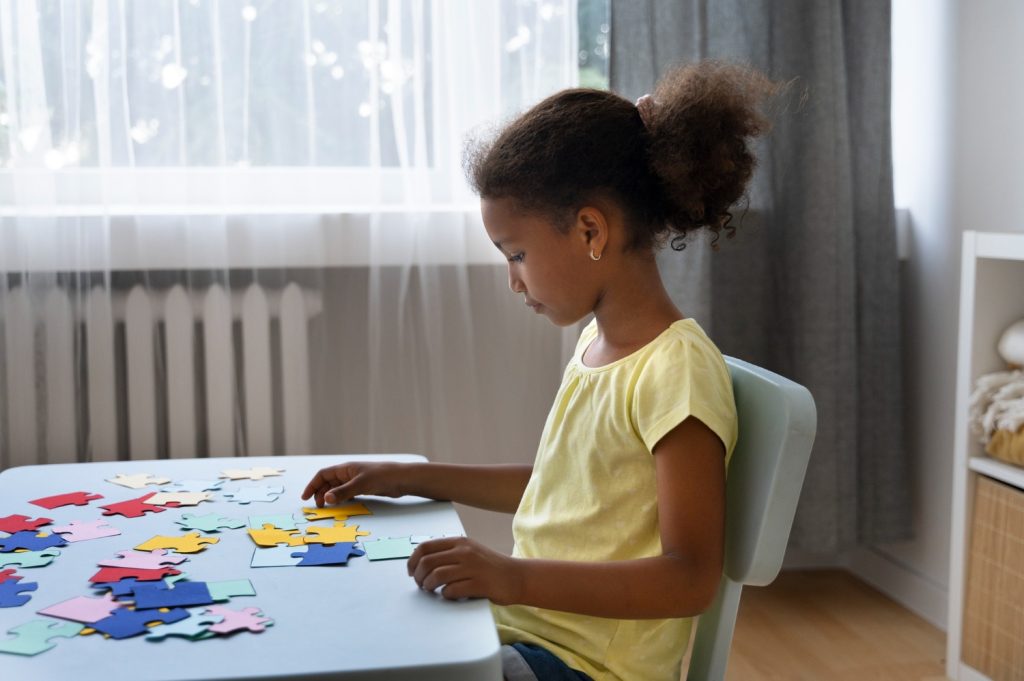
In today’s fast-paced technological landscape, encouraging children to cultivate their problem-solving skills is essential for their personal and academic growth. Logical puzzles serve as an engaging medium through which these skills can be developed. Puzzles not only provide entertainment but also stimulate critical thinking, foster creativity, and build resilience in young minds. Engaging in logical challenges can dramatically shape how children approach problems in various aspects of life.
Let’s delve into the myriad of benefits that logical puzzles can bring to a child’s routine:
- Enhances Critical Thinking: Logical puzzles require children to dissect complex problems, evaluate different scenarios, and make informed decisions based on available information. For example, solving a Sudoku puzzle challenges a child to consider spatial arrangements and numerical relationships, thereby honing their analytical skills.
- Boosts Cognitive Development: Engaging with diverse types of puzzles, such as riddles, crosswords, or logic games, stimulates various parts of the brain. Studies have shown that regular engagement in puzzle-solving can lead to improved memory and cognitive flexibility, essential skills for academic success.
- Improves Focus and Patience: The process of solving puzzles is often nonlinear and requires sustained attention. Children learn to embrace challenges, practice patience, and appreciate the journey of finding solutions, qualities that are invaluable when they face real-world problems.
- Encourages Collaboration: Completing puzzles in a group setting fosters teamwork and healthy communication. Group puzzle-solving activities can enhance social skills as children learn to articulate their thoughts, listen to others, and compromise on differing approaches.
Research indicates that children who frequently engage with logical puzzles may perform significantly better in academic settings. For example, a study published in the Journal of Educational Psychology found a positive correlation between puzzle-solving activities and students’ math problem-solving skills. This link underscores how integrating brain-teasers into children’s educational routines can lead to lasting impacts on their learning journeys.
Furthermore, logical puzzles can be seamlessly integrated into everyday life. For instance, parents can encourage their children to solve puzzles while waiting at restaurants or during family road trips, making learning a fun and shared experience. This not only makes the learning environment enjoyable but also reinforces the value of critical thinking in a practical context.
Join us as we further explore effective methods to implement logical puzzles into children’s lives, paving the way for enhanced problem-solving skills that will benefit them throughout their educational and personal endeavors. Together, we can unlock the door to a world of possibilities where challenging questions and solutions become second nature to the younger generation.
DISCOVER MORE: Click here to learn about the benefits
The Diverse World of Logical Puzzles
Logical puzzles come in various forms, ranging from simple riddles to complex Sudoku and logic grid puzzles. Each type offers unique challenges and benefits, catering to different age groups and cognitive levels. Exploring this diverse world of puzzles allows children to find what resonates with them, making learning a personalized experience. In the United States, many parents are increasingly embracing these activities as part of their children’s educational arsenal.
The Ample Variety of Puzzles
Some common types of logical puzzles include:
- Sudoku: A classic number placement puzzle that enhances analytical skills and encourages strategic thinking.
- Crossword Puzzles: These word-based challenges develop vocabulary and spelling while training the brain to make connections between clues and answers.
- Logic Grid Puzzles: These puzzles present a scenario and require the solver to use deductive reasoning to uncover relationships among various elements.
- Riddles: Often humorous or clever, riddles develop lateral thinking and foster a love for language and wordplay.
By varying the types of puzzles, children benefit from a well-rounded approach to developing their problem-solving skills. Traditional educational systems often prioritize standardized testing that emphasizes memorization over critical thinking. Integrating logical puzzles into informal settings allows children to practice these skills in a more relaxed and enjoyable environment, leading to deeper understanding and retention of concepts.
Building a Strong Foundation for Future Learning
Engaging with logical puzzles not only benefits children in the short term but also lays a strong foundation for future academic and life challenges. Research from institutions such as the American Psychological Association has shown that students who regularly participate in puzzle-solving activities demonstrate improved math and science skills. This enhancement can be attributed to the problem-solving strategies they develop through practice. For instance, while solving a math-related puzzle, children may learn how to approach problems methodically, breaking them down into smaller, manageable parts—an approach that proves useful in more complex subjects like algebra and geometry.
Moreover, the sense of achievement that comes from solving a puzzling conundrum boosts children’s self-esteem and motivation. When they complete a puzzle, they experience a surge of dopamine, the brain’s reward chemical, reinforcing their desire to tackle new challenges. This cycle of engagement and success fosters a growth mindset—a crucial attribute for lifelong learners.
It is clear that the impact of logical puzzles goes beyond mere entertainment. As children navigate through intricate challenges, they gain vital tools that will serve them well into adulthood, profoundly affecting their academic endeavors and personal growth. The next part of our exploration will focus on creating an environment conducive to puzzle-solving, ensuring that children fully benefit from these rich learning experiences.
Enhancing Cognitive Abilities through Puzzles
Logical puzzles serve as an engaging and entertaining means to sharpen a child’s cognitive skills. Through solving challenges that require critical thinking, children learn to analyze problems deeply. By systematically breaking down puzzles, they develop their analytical reasoning capabilities. This analytical approach becomes a crucial skill that extends beyond puzzles, applying to academic subjects like math and science, where problem-solving is essential.
The Role of Persistence and Patience
When children interact with logical puzzles, they often encounter obstacles. These challenges foster a growth mindset as kids learn the importance of persistence. The process of trial and error builds resilience, teaching them that failure is not a setback but rather a stepping stone to success. By working through frustration, children cultivate patience—an invaluable trait in both personal and academic settings.
Collaboration and Social Skills
Logical puzzles can also promote teamwork and social skills. When children collaborate to solve a puzzle, they practice effective communication and learn to respect different perspectives. These interactions enhance their ability to work in teams, a skill crucial for future educational and professional environments. Engaging in group puzzle-solving allows children to express themselves and encourages creative problem-solving approaches.
Incorporating Logical Puzzles into Daily Life
Parents and educators can incorporate logical puzzles into everyday activities, ensuring that children regularly engage with these beneficial challenges. From simple riddles to complex brain teasers, making puzzles a fun part of daily routines can significantly boost children’s enthusiasm towards problem-solving.
| Category | Advantages |
|---|---|
| Cognitive Skill Enhancement | Children develop analytical reasoning and critical thinking abilities. |
| Persistence and Resilience | Puzzles teach children to persist through challenges, fostering a growth mindset. |
| Social and Team Skills | Collaborating on puzzles enhances communication and teamwork abilities. |
As children continue to engage with logical puzzles, they not only improve specific skills but also gain a broader appreciation for the learning process, triggering their curiosity and desire to explore further.
DIVE DEEPER: Click here to discover more
The Role of Collaboration in Puzzle-Solving
While logical puzzles are often approached as solitary challenges, incorporating collaborative problem-solving can significantly enhance the learning experience. Group activities centered around puzzles allow children to share ideas, discuss strategies, and test different approaches. This practice not only nurtures their individual reasoning skills but also fosters teamwork and communication—crucial components of effective problem-solving.
Encouraging Social Interaction
When children engage in puzzle-solving in a group setting, they are exposed to a variety of perspectives and methodologies. This interchange can lead to a deeper understanding of the problem at hand and encourage children to articulate their thought process. For instance, a group of students could work together on a logic grid puzzle, discussing their reasoning behind each deduction and exploring alternatives if they hit a dead-end. Such discourse not only bolsters their problem-solving skills but also enhances their vocabulary, as they learn to communicate their thoughts clearly and effectively.
Moreover, collaborative sessions can break down the barriers of frustration. Puzzle-solving can sometimes be daunting, and children may feel overwhelmed by challenging tasks. Working together allows them to support one another, providing encouragement and facilitating a more relaxed environment. When struggling with a particularly challenging puzzle, a child might find inspiration in a teammate’s insight, illuminating a path previously unnoticed. This shared journey can turn what may be perceived as a daunting challenge into a rewarding experience of discovery.
Real-World Problem Solving
The skills developed through puzzle-solving are not confined to the realm of games; they translate effectively into real-world scenarios. Research indicates that children who frequently engage in logical puzzles tend to demonstrate heightened critical thinking abilities, which are essential across various disciplines and in everyday decision-making. Whether it’s organizing their study timetable or figuring out how to balance extracurricular activities, the analytical mindset fostered through solving puzzles plays a vital role in everyday problem-solving.
One standout example can be seen in STEM education (science, technology, engineering, and mathematics), where logical thinking is paramount. Projects that incorporate puzzles can serve as captivating entry points for children to explore these fields. For instance, engaging students in a multi-step problem that involves both math and real-world application—such as calculating the volume of water needed for a garden based on a Sudoku-style grid—makes learning more engaging and relevant. It bridges the gap between theoretical knowledge and practical application.
The Psychological Benefits of Puzzle Engagement
In addition to cognitive gains, participating in logical puzzles also yields significant psychological advantages. Unraveling challenging problems can be an effective way to combat symptoms of anxiety. When children focus their energy on solving puzzles, they divert attention from stressors and channel their mental resources into a constructive activity. This, in turn, can enhance their emotional resilience, allowing them to approach issues with a cooler, clearer mindset in high-pressure situations.
Furthermore, the routine of engaging with logical puzzles can instill consistency and discipline in children’s daily lives. Allocating specific times for puzzle-solving encourages time management—a skill that benefits academic achievement and personal growth in the long run. Just as a runner prepares for a race, regular puzzle practice prepares children for the mental challenges they will encounter throughout their lives.
As children venture into the world of logical puzzles, the cognitive, social, and psychological benefits become increasingly apparent. These diverse advantages empower them to become resourceful problem solvers, well-prepared for future academic pursuits and real-world dilemmas.
LEARN MORE: Click here to discover how puzzles can enhance your memory
Conclusion: Unlocking a World of Possibilities through Puzzles
In conclusion, the profound impact of logical puzzles on enhancing children’s problem-solving skills cannot be overstated. Through engaging in these intricate challenges, children develop crucial cognitive abilities, improve their social interaction skills, and cultivate emotional resilience. The diverse experiences gained from puzzle-solving not only sharpen their analytical thinking but also equip them with the tools necessary for tackling real-world challenges across various domains, including academics, social interactions, and everyday decision-making.
Moreover, the collaborative aspect of puzzle-solving encourages teamwork and effective communication among peers, essential skills in today’s interconnected world. When children work together to unravel complex problems, they cultivate a culture of support and shared learning that fosters creativity and innovation. These collaborative efforts will serve them well as they navigate the complexities of their future educational and professional endeavors.
Importantly, the psychological benefits derived from engaging in isometric reasoning activities such as logical puzzles have lasting implications for children’s emotional well-being. By providing a healthy outlet for stress and improving their focus, these puzzles lay the groundwork for a balanced approach to tackling life’s challenges.
As we reflect on the multifaceted advantages of logical puzzles, it is clear that they play a pivotal role in shaping well-rounded, capable problem solvers. Encouraging children to immerse themselves in this stimulating activity not only enhances their mental acuity but also prepares them for a bright future filled with possibilities—one logical step at a time. Parents, educators, and caregivers must recognize the value of puzzle-solving as a foundational tool in nurturing the next generation of critical thinkers and innovators.