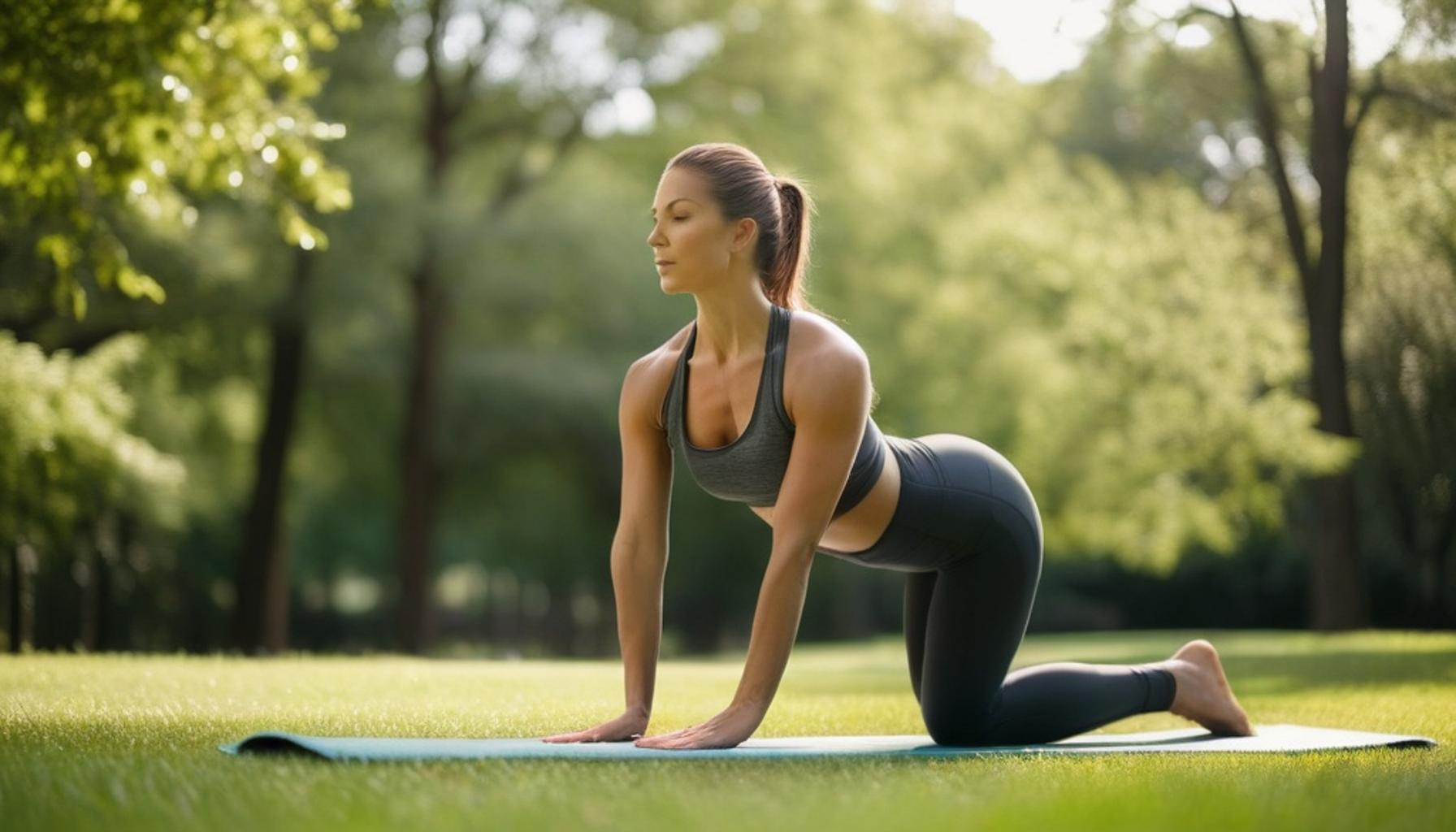
Home Workouts: How to Create an Effective Routine Without Equipment
Why Home Workouts Are Taking Over American Fitness Routines
Gyms are no longer the only place to break a sweat. Across the United States, home workouts have become a go-to solution for busy professionals, parents, and students looking to stay fit without a monthly membership fee.
According to recent fitness industry surveys, more than 60% of Americans now incorporate some form of exercise at home into their weekly routine. The reasons are simple: convenience, cost savings, and flexibility. From tiny apartments in New York City to suburban garages in Texas, people are transforming everyday spaces into personal training grounds, proving that a gym membership is no longer a prerequisite for staying in shape.
This shift didn’t happen overnight. The pandemic accelerated a trend that was already gaining traction, as fitness apps, YouTube channels, and online coaches made it easier than ever to follow structured programs from a living room. Even as gyms reopened nationwide, many Americans discovered they preferred the freedom of training on their own schedule, and that preference has stuck.
What Makes a No Equipment Workout Routine So Appealing?
You don’t need a treadmill or a rack of dumbbells to build strength and endurance. Bodyweight exercises at home like push-ups, squats, and lunges can deliver results comparable to traditional gym training.
Here’s why more people are ditching the equipment altogether:
- Zero cost — no membership fees or expensive gear required
- Time-saving — no commute to the gym means more time for the actual workout
- Adaptability — routines can be adjusted for any fitness level, from beginner to advanced
- Privacy — exercise comfortably without feeling watched or judged
Beyond these practical perks, there’s a psychological advantage too. Many people report feeling less intimidated exercising at home, especially beginners who might otherwise avoid gyms altogether. This sense of comfort often translates into greater consistency, which fitness experts agree is the single most important factor in long-term progress.
Building an Effective Home Fitness Plan
The challenge isn’t motivation to start—it’s knowing how to structure a workout routine without equipment that actually delivers results. Random exercises without a plan often lead to plateaus or burnout.
This is where strategy matters. The following sections break down effective home workout tips, including how to balance strength, cardio, and recovery for a routine that truly works. Understanding how to progressively increase difficulty, whether through slower repetitions, added sets, or advanced variations like plyometric push-ups, can make all the difference between stagnation and steady improvement.
As more Americans embrace this shift, one question emerges: could the traditional gym membership eventually become optional rather than essential? The numbers suggest we may already be witnessing that transformation unfold in real time.
CHECK OUT: The Benefits of Customizing Your Exercise Routine to Fit Your Lifestyle
Setting the Foundation: The Core Principles of a Home Fitness Plan
Before diving into specific exercises, it’s worth understanding what separates a haphazard collection of movements from a genuinely effective home fitness plan. Trainers across the country, from boutique studios in Austin to corporate wellness programs in New York City, consistently point to three pillars: structure, progression, and consistency.
Without these elements, even the most enthusiastic beginner risks hitting a wall within weeks. A well-designed no equipment workout routine mimics what happens in commercial gyms, targeting different muscle groups on different days while allowing adequate recovery. This isn’t just theory borrowed from bodybuilding magazines; it’s a framework grounded in exercise physiology that applies whether someone is training in a fully-equipped facility or a small apartment living room.
The Weekly Framework That Works
Fitness coaches from Los Angeles to Chicago tend to recommend a similar baseline structure for beginners transitioning into home training. This isn’t arbitrary; it’s based on how muscles repair and grow stronger between sessions, a process that requires deliberate planning rather than random enthusiasm.
A balanced approach typically includes:
- Strength-focused days — targeting major muscle groups through bodyweight exercises at home like squats, push-ups, and planks
- Cardio sessions — using high-intensity intervals, jumping jacks, or simple stair climbing for heart health
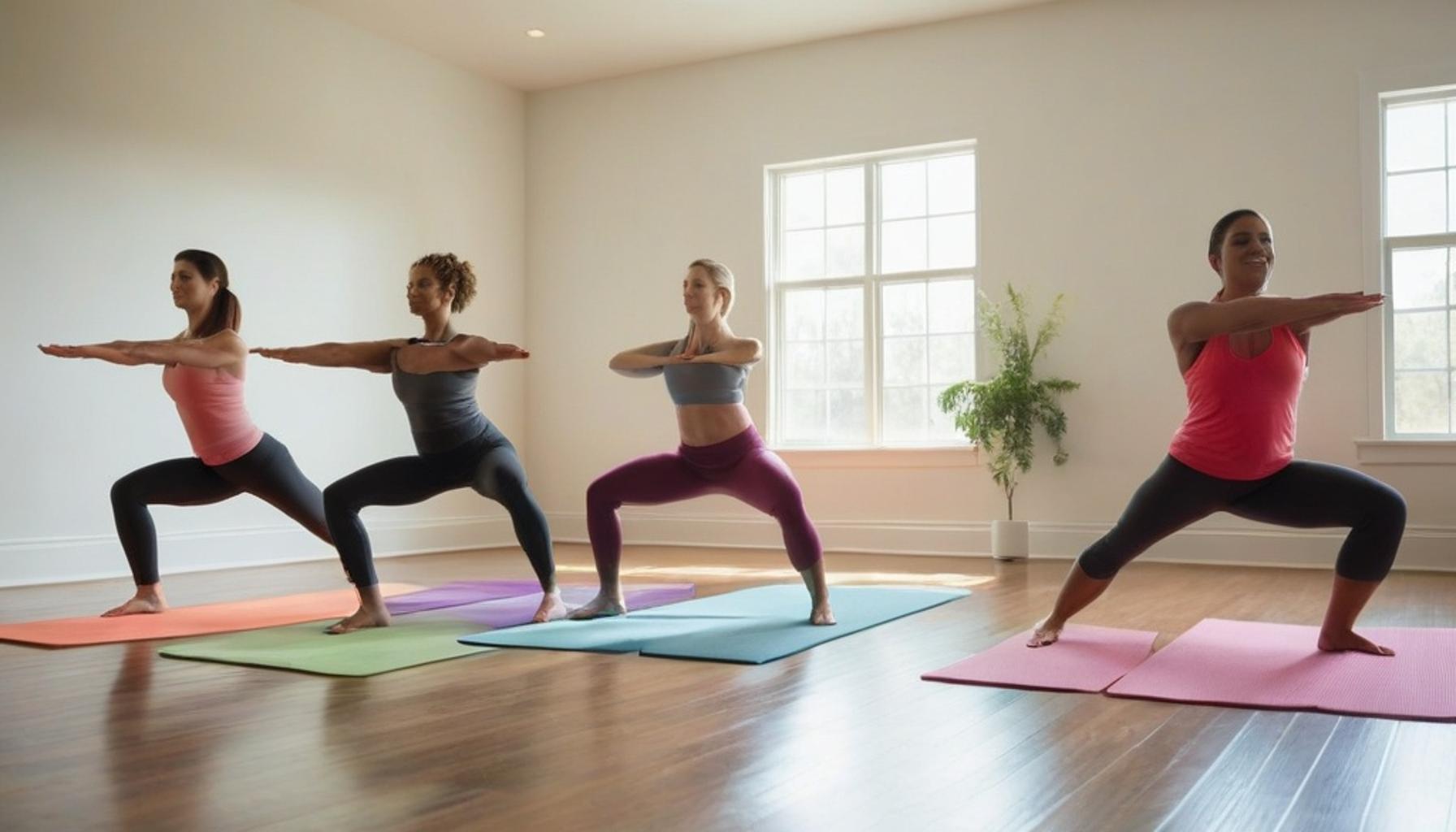
- Active recovery — light stretching or yoga to prevent stiffness and reduce injury risk
- Complete rest days — allowing muscles to repair, which is when actual strength gains occur
Skipping recovery is one of the most common mistakes newcomers make. According to the American College of Sports Medicine, muscles need roughly 48 hours to recover after intense strength work, meaning back-to-back leg days, for instance, often do more harm than good. Overtraining without proper rest can lead to plateaued performance, increased soreness, and in some cases, injuries that sideline progress for weeks.
Why Progressive Overload Still Applies at Home
Many people assume that without weights, there’s no way to keep challenging their bodies. That assumption is incorrect. The principle of progressive overload, gradually increasing difficulty over time, still applies fully to a workout routine without equipment, and understanding this concept can be the difference between stagnation and steady improvement.
Instead of adding heavier dumbbells, home exercisers can:
- Slow down repetitions to increase muscle time under tension
- Add extra sets or reduce rest periods between exercises
- Progress to harder variations, such as moving from standard push-ups to decline or plyometric versions
- Incorporate single-limb movements, like one-legged squats, to increase intensity
These small adjustments can replicate the demands of gym equipment surprisingly well. A 2021 study published in the Journal of Strength and Conditioning Research found that bodyweight training, when properly progressed, produced strength gains comparable to resistance-machine workouts over a 12-week period. Researchers noted that participants who consistently varied tempo and volume experienced measurable improvements in both muscular endurance and overall strength, challenging long-held assumptions about the limitations of equipment-free training.
This data reinforces something fitness professionals have argued for years: the tool matters less than the strategy behind it. What actually determines results is how intentionally a person structures their Home Workouts, not whether they have access to a squat rack or a set of kettlebells. For anyone skeptical about ditching the gym membership, this growing body of research suggests it might be time to reconsider what’s truly possible within four walls and a little floor space.
YOU MAY ALSO LIKE: The Importance of Creating a Personalized Exercise Routine for Mental Well-Being
Designing Movements That Deliver Real Results
Once the framework is in place, the next question becomes practical: which exercises actually belong in a home fitness plan? Not all bodyweight movements are created equal, and some deliver far more value per minute than others.
Trainers in cities like Denver and Portland, where outdoor and home-based fitness culture has flourished in recent years, often emphasize compound movements over isolated ones. These are exercises that recruit multiple muscle groups simultaneously, making every rep more efficient. For anyone building a workout routine without equipment, this efficiency matters more than variety alone.
The Movements Worth Prioritizing
Certain bodyweight exercises at home consistently appear across professional programming because they replicate functional, real-world patterns of movement. These include:
- Squats and lunges — building lower-body strength while improving balance and joint stability
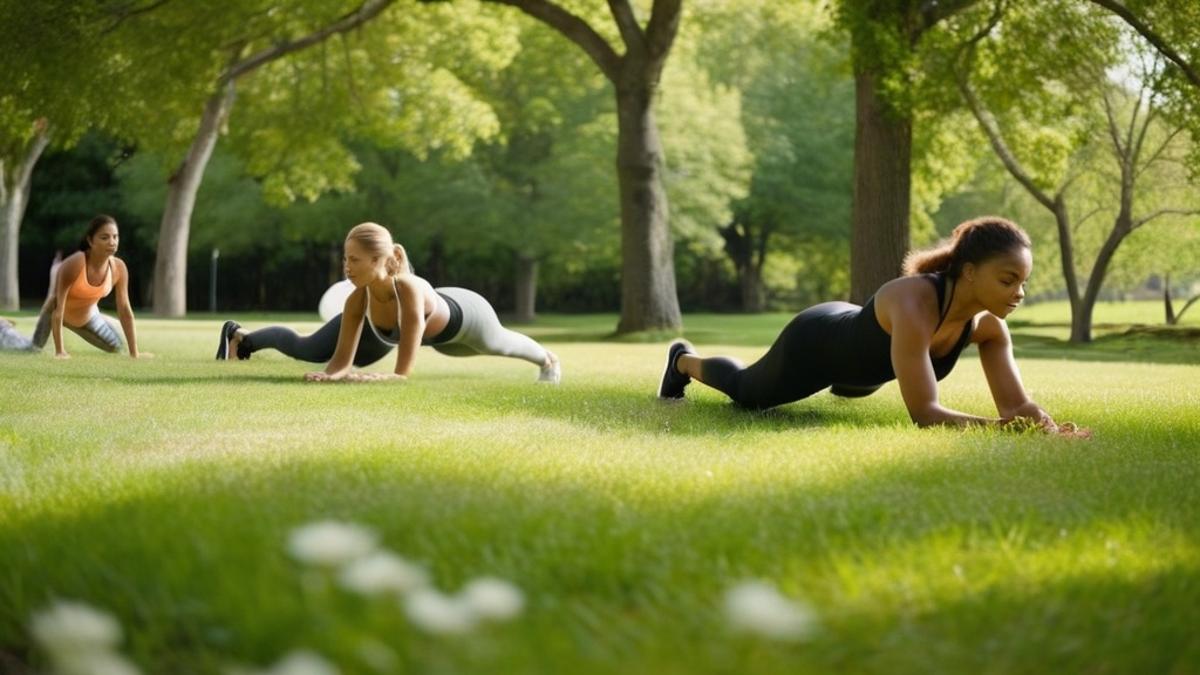
- Push-ups and their variations — targeting chest, shoulders, and triceps without a single piece of equipment
- Planks and side planks — strengthening the core in ways that translate directly to posture and injury prevention
- Glute bridges — activating muscles that many desk-bound Americans allow to weaken over time
- Burpees and mountain climbers — combining strength and cardio for a metabolic boost in short bursts
What makes these particularly valuable is their adaptability. A beginner in Miami and an advanced athlete in Seattle can perform the exact same squat, just at different depths, speeds, or repetition counts, and both walk away appropriately challenged.
Timing, Volume, and the Numbers Behind Progress
How long should a session actually last? This is one of the most searched questions among people exploring effective home workout tips, and the answer might surprise those accustomed to hour-long gym sessions.
Research published by the National Academy of Sports Medicine suggests that sessions lasting between 20 and 40 minutes, performed with proper intensity, can produce results comparable to longer workouts, particularly when using circuit-style formats. This means stringing together five or six exercises with minimal rest between them, then repeating the circuit two or three times.
A typical circuit might look like this:
- 45 seconds of squats, followed by 15 seconds of rest
- 45 seconds of push-ups, followed by 15 seconds of rest
- 45 seconds of plank holds, followed by 15 seconds of rest
- 45 seconds of mountain climbers, followed by 15 seconds of rest
Repeated three times, this alone totals roughly 24 minutes, yet elevates heart rate and engages nearly every major muscle group. It’s a format increasingly favored by busy professionals who can’t dedicate ninety minutes to a gym commute and workout combined.
What’s notable is how this approach also builds cardiovascular endurance alongside strength, blurring the traditional line between the two. For anyone still assuming that meaningful fitness requires expensive machines, these numbers suggest otherwise, and they invite a closer look at just how far a disciplined, well-structured routine can go without ever stepping foot inside a gym.
The Bottom Line on Building a Sustainable Practice
What emerges from all of this is a simple truth: Home Workouts succeed or fail not on equipment, but on structure. The framework, the movement selection, and the timing all matter more than whatever gadgets a fitness influencer might be promoting that month.
A well-designed home fitness plan doesn’t require a spare room full of machines. It requires consistency, a handful of proven bodyweight movements, and a willingness to track progress in ways that go beyond the number on a scale.
What to Carry Forward
For readers ready to start their own no equipment workout routine, a few principles stand out above the rest:
- Prioritize compound movements that work multiple muscle groups at once
- Keep sessions between 20 and 40 minutes, using circuit formats when time is limited
- Progress gradually by adjusting depth, speed, or repetitions rather than adding external weight
- Track performance over weeks, not days, to see real adaptation
These effective home workout tips aren’t shortcuts. They’re the same principles trainers from Denver to Miami rely on when working with clients who have no access to a gym, whether by choice, budget, or circumstance.
Perhaps the more interesting question going forward isn’t whether a workout routine without equipment can be effective — the data already answers that. It’s how far this approach might reshape the broader fitness industry, as more Americans discover that bodyweight exercises at home can rival, and sometimes outperform, expensive memberships and equipment they rarely use.
The living room, it turns out, may have been a legitimate gym all along.
Frequently Asked Questions
How many days a week should I do home workouts to see real results?
Aim for 4 to 5 days per week, mixing strength-focused bodyweight sessions with active recovery or light cardio days. Consistency matters more than intensity, so a sustainable schedule of 30 to 45 minutes per session will produce better long-term results than sporadic, exhausting workouts. Give major muscle groups at least 48 hours to recover between intense sessions.
Can I actually build muscle with home workouts and no equipment?
Yes, bodyweight exercises like push-ups, pistol squats, and pull-up progressions can build significant muscle when you manipulate tempo, range of motion, and rest periods to increase difficulty over time. Techniques like slowing down reps, adding pauses, or moving to single-limb variations create progressive overload without weights. Muscle growth depends more on consistent tension and progression than on lifting external weight specifically.
What’s a good beginner home workout routine without equipment?
Start with a simple full-body circuit: bodyweight squats, push-ups (modified on knees if needed), glute bridges, plank holds, and walking lunges, doing 2 to 3 rounds of 10 to 15 reps each. Perform this routine three times a week with rest days in between to let your body adapt. As these become easier, increase reps, slow the tempo, or add more challenging variations like jump squats.
How do I make home workouts harder as I get stronger?
Progressive overload without weights comes from adjusting variables like tempo, range of motion, unilateral movements, and reduced rest periods between sets. For example, move from regular push-ups to decline or archer push-ups, or from bodyweight squats to jump squats and single-leg pistol squats. Tracking your reps and sets over time helps you know exactly when it’s time to increase difficulty.
Are home workouts as effective as going to the gym?
Home workouts can be just as effective as gym training for building strength, endurance, and cardiovascular fitness, especially for beginners and intermediate exercisers. The main limitation is that very advanced lifters eventually need heavier external resistance to keep progressing in raw strength, but bodyweight training with smart programming covers most fitness goals. Consistency and proper technique matter far more than the location or equipment used.
How long should a no-equipment home workout session last?
Most effective home workouts last between 20 and 45 minutes, depending on your goals and the intensity of the exercises chosen. Shorter, high-intensity circuits of 20 to 30 minutes work well for fat loss and conditioning, while strength-focused sessions with slower tempos and more sets may run closer to 40 to 45 minutes. Quality of movement and effort matter more than simply extending the duration of a workout.

Linda Carter
Linda Carter is a writer specializing in healthy habits and balanced living. With extensive experience helping readers build sustainable routines, she shares practical guidance on nutrition, physical activity, quality sleep, stress management, and emotional well-being. Her goal is to offer simple, accessible strategies that inspire people to care for their health and enjoy a more balanced life.