The Influence of Cognitive Challenges on Neuroplasticity: Can Puzzles Shape Our Brains?
The Influence of Cognitive Challenges on Neuroplasticity
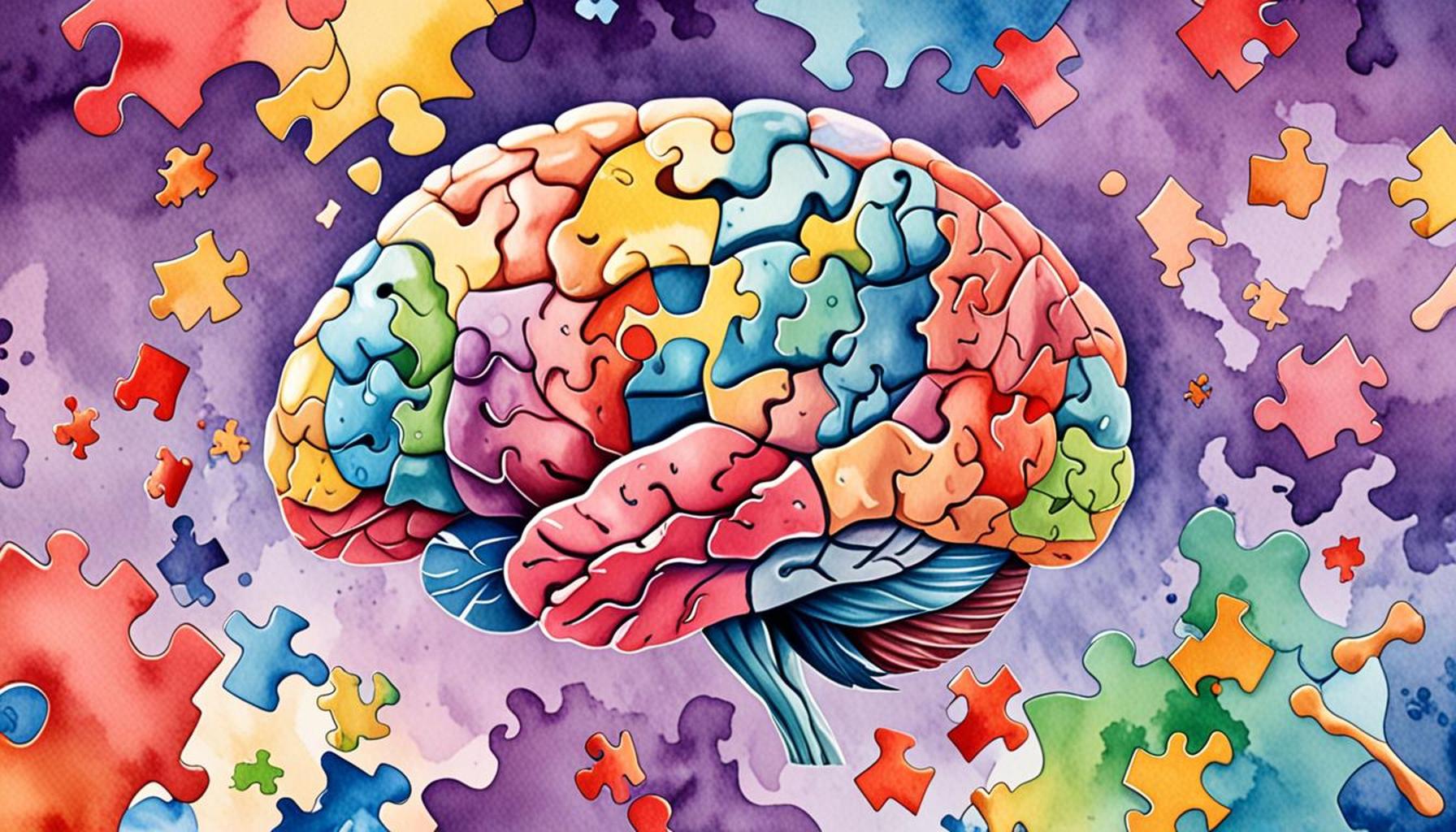
Our brains are incredibly adaptable, capable of forming new connections throughout our lives. This phenomenon is known as neuroplasticity. Engaging in cognitive challenges, such as puzzles and brain games, may play a vital role in enhancing our brain’s capacity. Not only do these challenges stimulate various cognitive functions, but they also serve as a means to promote mental well-being and resilience against cognitive decline.
But how exactly do these activities influence neuroplasticity? Here are some key insights that detail the multifaceted benefits of engaging in cognitive challenges:
- Cognitive engagement: Activities that require problem-solving skills can significantly improve mental flexibility. For instance, games like chess or strategy-based video games compel players to think ahead, plan moves, and adapt strategies, enhancing brain adaptive mechanisms.
- Memory enhancement: Many puzzles, such as crosswords and Sudoku, necessitate recalling information and applying learned knowledge. This process can strengthen memory pathways, essentially forging new connections in the brain. Regularly engaging in such activities can lead to improved memory retention and recall, which is particularly beneficial as we age.
- Stress reduction: Engaging in enjoyable mental activities may also lower stress, promoting a healthier brain environment. Activities that challenge the mind can be a form of mindfulness, providing a break from daily stressors. This connection between mental engagement and emotional well-being cannot be understated, as lower levels of stress have been shown to create a favorable environment for neuroplastic change.
Research has shown that the types of cognitive challenges we engage with can vary greatly, ranging from traditional puzzles like crosswords and Sudoku to logic puzzles, riddles, and math challenges. Each type of activity may offer unique benefits that contribute to a more resilient and adaptable brain. For instance, logic puzzles enhance reasoning skills, while math challenges may improve numerical insight and analytical thinking.
Furthermore, understanding the relationship between cognitive challenges and neuroplasticity opens avenues for further exploration. What if enhancing brain function could be as simple as dedicating time to a daily puzzle? Imagine a world where mental fitness could become as common as physical fitness, leading to enhanced cognitive longevity and overall brain health.
As more studies emerge, the potential implications on healthcare and education could be profound. Educators might incorporate cognitive games into their curricula to foster students’ mental agility, and therapists could use these tools to aid patients in recovering from brain injuries. Delving deeper into this topic could reveal how we can actively shape our brains through simple, enjoyable exercises, making cognitive challenges a valuable addition to both individual lifestyles and broader healthcare strategies.
DISCOVER MORE: Click here to learn how memory games can boost your brainpower
Unlocking the Mind: Cognitive Challenges and Their Role in Neuroplasticity
The relationship between cognitive challenges and neuroplasticity is a captivating area of study that reveals how our brains can continuously adapt, learn, and grow. At the heart of this exploration lies the fundamental question: can simple activities like puzzles have a transformative effect on our cognitive capabilities? Evidence suggests that the answer is a resounding yes. Engaging in mentally stimulating activities benefits brain function and actively contributes to its structural evolution.
To grasp the impact of cognitive challenges on neuroplasticity, it’s essential to understand how these activities can foster new neural connections. When we engage our brains in challenges, we are not merely solving problems or completing tasks; we are actively participating in a process that can lead to lasting change. Here are some significant ways cognitive challenges can reshape our neural frameworks:
- Enhanced Problem-Solving Skills: Activities such as Sudoku or strategy games like Settlers of Catan require participants to think critically and analyze various outcomes. This engagement promotes the development of new cognitive pathways, effectively enhancing problem-solving capabilities that can be applied in real-life situations.
- Increased Creativity: Solving puzzles often involves thinking outside the box and considering alternative strategies. Such exercises can stimulate the brain’s creative centers, leading to improved innovation in both personal and professional contexts. Enhanced creativity is not only useful in artistic pursuits but also in business problem-solving and everyday decision-making.
- Strengthened Social Connections: Many cognitive challenges can be enjoyed in groups, fostering collaboration and communication. Social interaction is itself a cognitive workout, promoting healthier brain function. Activities such as trivia nights or team-based puzzle games encourage teamwork, which can enhance neuroplastic responses in support of collective problem-solving.
Current research into neuroplasticity shows that brain scans of individuals who regularly engage in cognitive challenges reveal increased gray matter volume in areas associated with memory and learning. One study, published in the journal Neuropsychology, demonstrated that older adults who participated in cognitive activities showed improved cognitive performance and increased neural connectivity compared to those who engaged less. The importance of ongoing brain stimulation, particularly as we age, cannot be overstated.
Moreover, the accessibility of cognitive challenges has never been greater. From mobile applications designed to bolster mental acuity to an array of DIY puzzles available at bookstores and online platforms, there’s something to suit everyone’s interests. This democratization of brain fitness suggests we all have the power to incorporate cognitive challenges into our daily routines, regardless of our age or background.
While the precise mechanisms behind neuroplasticity remain a topic of ongoing research, it is clear that actively challenging our brains through puzzles and games has substantial implications for cognitive health. The prospect of enhancing brain function through enjoyable activities opens up exciting possibilities not just for individuals but also for educational systems and therapeutic practices.
Ultimately, as we continue to unravel the complexities of the brain, engaging in cognitive challenges can be seen as a vital lifelong practice. With increasing evidence suggesting that these activities can have profound impacts on our cognitive health, the next question on the horizon is how we can further capitalize on this inherent adaptability of the brain. Puzzles may just be the key.
The Role of Puzzles in Cognitive Development
Engaging in cognitive challenges, particularly through puzzles, plays a significant role in enhancing neuroplasticity—the brain’s ability to reorganize itself by forming new neural connections. Neuroscientific research suggests that when individuals tackle complex tasks, such as solving jigsaw puzzles or playing strategic games, their brains undergo a transformative process that can lead to improved cognitive function.One of the striking features of these mental activities is their capability to stimulate various areas of the brain simultaneously. For instance, solving a Sudoku puzzle not only calls upon mathematical skills but also enhances memory and logical reasoning. This multi-faceted engagement can lead to the growth of new synapses and pathways, further solidifying the argument that challenges like puzzles can actively shape our brains in a positive manner.
Understanding Neuroplasticity: A Deeper Dive
Neuroplasticity is often classified into two types: functional and structural. Functional plasticity refers to the brain’s ability to shift functions from damaged areas to undamaged ones, while structural plasticity involves the actual physical changes in the brain’s structure in response to learning and experience. Engaging regularly in puzzles and similar mental exercises can bolster both forms of neuroplasticity.Recent studies have indicated that consistent puzzle-solving habits can lead to long-lasting improvements in cognitive performance, particularly in older adults. This is especially significant given the increasing life expectancy and the corresponding need for strategies that can mitigate cognitive decline. Additionally, the sense of satisfaction derived from completing a difficult puzzle can also foster a positive reinforcement loop, encouraging individuals to engage in further cognitive challenges.
Puzzles as a Tool for Mental Rehabilitation
In clinical settings, puzzles are not merely tools for leisure; they are being integrated into therapeutic practices aimed at rehabilitation following traumatic brain injuries or strokes. The use of puzzles serves as an engaging method to stimulate cognitive recovery by providing patients with enjoyable yet challenging cognitive tasks. Moreover, the growing field of gamification in mental health further emphasizes how puzzles can be designed with specific cognitive goals in mind. This approach not only makes recovery more enjoyable but also can lead to faster and more effective results. By integrating cognitive challenges into therapeutic protocols, health professionals can leverage neuroplasticity to enhance recovery outcomes for patients.Renowned psychologist Dr. Barbara Wilson believes that the future of cognitive training lies in tailor-made challenges that can adapt to individual needs, allowing brains to harness their full potential. As research evolves, it becomes increasingly clear that puzzles might just be the key to unlocking the brain’s latent capabilities, ultimately leading to improved mental agility and life satisfaction.
| Cognitive Benefits | Examples of Puzzles |
|---|---|
| Enhances Critical Thinking | Crossword puzzles enhance vocabulary and reasoning ability. |
| Improves Memory | Sudoku requires recalling numbers and patterns, boosting memory skills. |
| Fosters Problem-Solving Skills | Puzzle games like Tetris promote spatial reasoning and strategic planning. |
| Encourages Social Interaction | Group puzzles enhance teamwork and collaborative problem-solving. |
By understanding and harnessing the impact of puzzles on neuroplasticity, individuals can not only foster their cognitive skills but can also contribute to the overall enhancement of mental health and well-being. As we delve deeper into this interplay, the detrimental effects of cognitive stagnation become glaringly evident, highlighting the urgent need for engaging mental practices in our daily lives.
DIVE DEEPER: Click here to discover how memory games can boost your brain power
The Science Behind Cognitive Challenges: Neuroplasticity in Action
Delving deeper into the science of neuroplasticity, recent studies have highlighted various types of cognitive challenges that seem to trigger significant brain changes. Activities that engage memory, attention, and reasoning are particularly valuable in prompting neuroplastic shifts. For instance, researchers at the University of California found that individuals who regularly engage in memory games exhibit increased synaptic connections in the hippocampus, a brain region crucial for memory formation. This suggests that the hippocampus can adapt structurally and functionally through mental exercise, showcasing the tangible impacts of cognitive challenges.
Interestingly, the type of puzzles we choose can also dictate the form of neuroplastic adaptation. Logic puzzles, for example, require analytical thinking and reasoning skills. By continually solving these types of challenges, individuals can cultivate better logical reasoning capabilities while strengthening the neural pathways associated with judgment and deduction. One popular logic puzzle, the classic Knights and Knaves enigmas, forces solvers to rely on deductive reasoning, constantly training their ability to analyze complex information.
Meanwhile, spatial puzzles, like jigsaw puzzles and 3D shape challenges, activate different cognitive functions, particularly those associated with visual-spatial processing. A 2018 study published in the journal Frontiers in Psychology revealed that participants who engaged in regular jigsaw puzzle activities showed improved spatial reasoning skills, which are essential not just for navigation but also for fields like engineering and architecture. The findings indicate that spatial puzzles can stimulate specific areas in the brain, leading to enhanced visualization and manipulation abilities.
Moreover, the prevalence of digital brain training platforms illustrates how cognitive challenges are evolving with technology. Apps like Lumosity and Peak offer a variety of games designed to enhance different cognitive skills, from memory and attention to problem-solving. Emerging research indicates that participants in such programs can experience measurable increases in cognitive function and neuroplastic changes. One longitudinal study found that individuals in the brain training group exhibited sustained improvements in cognitive tasks compared to a control group that did not engage in similar activities, highlighting the potential of structured cognitive challenges.
Additionally, researchers have begun to explore the role of gamification in educational settings. By introducing puzzle-like challenges in classrooms, educators are creating environments conducive to neuroplastic development. Studies suggest that students who engage in gamified learning experience higher motivation levels and improved retention of material, effectively reshaping their cognitive abilities through enjoyable and interactive methods.
A fascinating aspect of these cognitive challenges is their adaptability. As people age, the brain’s plasticity can diminish, often leading to concerns around cognitive decline. However, a significant body of research suggests that engaging in cognitive challenges—whether through traditional puzzles or innovative brain-training programs—can help mitigate these effects. In fact, a meta-analysis published in Psychological Bulletin established that older adults engaging in mentally stimulating activities could fend off cognitive decline and even slow the onset of neurodegenerative diseases like Alzheimer’s.
In conclusion, the evidence suggests a compelling connection between cognitive challenges and neuroplasticity, revealing the transformative potential of puzzles and brain games. As ongoing research uncovers new findings, the excitement around using puzzles as a means to shape our brains continues to burgeon. With an array of options available, the opportunity for individuals to explore these cognitive adventures is greater than ever.
DISCOVER MORE: Click here to unlock the secrets of logical puzzles
Final Thoughts on Cognitive Challenges and Neuroplasticity
In summary, the exploration of cognitive challenges and their profound impact on neuroplasticity reveals a vibrant field of study with exciting implications for personal development and lifelong learning. From memory games that forge new synaptic connections in the hippocampus to logic and spatial puzzles that enhance reasoning and visualization skills, the potential for puzzles to reshape our cognitive landscape is both fascinating and promising. As scholarly research continues to illuminate these relationships, it is clear that the brain remains adaptable, responding dynamically to various mental workouts.
Furthermore, the advent of digital brain training platforms and gamified educational strategies underscores a cultural shift towards more interactive and engaging means of enhancing cognitive function. These tools not only promote brain health in younger populations but also offer significant benefits for older adults, mitigating risks associated with cognitive decline and neurodegenerative diseases. The growing body of evidence indicates that by embracing a variety of cognitive challenges, individuals can actively participate in shaping their brain’s future.
As you consider embracing cognitive challenges in your daily life, whether through traditional puzzles, brain games, or gamified learning approaches, remember the essential truth: the brain is not a static organ but a dynamic entity capable of growth and transformation. The journey of discovery through puzzles may very well lead you to unlock new cognitive abilities, enhance your mental resilience, and contribute significantly to your overall well-being.