Unraveling the Benefits of Puzzles for Memory and Concentration
The Cognitive Benefits of Puzzles
Engaging with puzzles is not just a means to pass the time; it’s an excellent workout for the brain that offers abundant cognitive rewards. With the plethora of research available, numerous studies reveal that activities such as jigsaw puzzles, crosswords, Sudoku, and various logic games can have a significant impact on memory and concentration. For instance, a study conducted by the University of Exeter found that older adults who spent time doing puzzles were found to have sharper cognitive abilities than those who didn’t engage in brain-training activities.
Benefits of Solving Puzzles
By dedicating time to puzzles, individuals will experience a plethora of advantages, which are not only limited to entertainment but contribute substantially to mental health and cognitive function.
- Improved cognitive function: Regular puzzle enthusiasts often report sharper thinking skills and domain-specific expertise. For example, solving crosswords can enhance vocabulary and knowledge about the world, allowing individuals to communicate more effectively.
- Enhanced memory retention: Engaging in diverse challenges boosts recall abilities. Activities like Sudoku can promote numerical memory, while jigsaw puzzles improve visual-spatial relationships and help with picture recall.
- Increased attention span: Focusing on puzzles can train the mind to concentrate for extended periods. This means people spend less time distracted by phone notifications or television, improving overall productivity.
Puzzles as a Tool for Stress Relief
In a world brimming with distractions, the act of piecing together a puzzle encourages mental clarity. Not only do puzzles stimulate the brain, but they also interact with areas related to emotional regulation. Research highlights that when individuals immerse themselves in puzzles, they often enter a state of ‘flow’ where they lose track of time, reducing anxiety and improving relaxation levels. Furthermore, the calming experience of solving puzzles can be likened to a meditative practice, providing a sense of achievement and satisfaction.
Moreover, studies have indicated that individuals who regularly engage in these problem-solving activities are less likely to experience age-related cognitive decline. Engaging puzzle-solving enthusiasts such as those participating in the popular National Puzzlers’ League have advocated the long-term benefits of regular puzzle engagement.
Incorporating Puzzles into Daily Life
As you delve deeper into the myriad advantages offered by puzzles, you’ll uncover strategies to incorporate them into your daily routine effectively. You could allocate just a few minutes each day to complete a crossword during your morning coffee or dedicate a quiet hour to assembling jigsaw puzzles in the evening. This practice could lead to substantial improvements in your cognitive agility. Furthermore, consider integrating puzzles into social settings, as experiencing problem-solving with friends or family can deepen relationships while reaping mutual cognitive benefits.
With various puzzle options accessible in bookstores, online platforms, or even mobile apps, enhancing your brain’s fitness has never been more feasible. As you navigate through this engaging and rewarding world of puzzles, remember that these seemingly simple games hold the potential for substantial mental enrichment.
DISCOVER MORE: Click here to delve into the fascinating effects on brain function
Decoding the Impact of Puzzles on Memory and Concentration
Puzzles serve as powerful cognitive tools, actively engaging different areas of the brain to enhance both memory and concentration. Understanding how puzzles contribute to these mental faculties can inspire individuals to prioritize such activities in their daily routines. Research consistently underscores the link between puzzle-solving and cognitive development, indicating that individuals who regularly tackle these challenges experience noticeable improvements in both memory recall and the ability to concentrate over prolonged periods.
Memory Enhancement Through Puzzle Engagement
One of the most appealing advantages of puzzles is their capacity to boost memory. Whether it’s a crossword puzzle that prompts recall of vocabulary or a Sudoku that sharpens numerical skills, the act of solving strengthens neural connections in the brain. This connection can be particularly beneficial for aging individuals. In a study published in the journal Alzheimer’s Research & Therapy, participants who engaged in puzzles showed a reduced likelihood of experiencing memory deficits as compared to those who avoided them. Impressively, these benefits are not isolated to older adults; individuals of all ages can leverage puzzles to enhance their memory capabilities.
- Visual-Spatial Skills: Jigsaw puzzles, in particular, enhance visual-spatial reasoning. As individuals manipulate pieces and visualize the completed image, they cultivate the ability to understand how different objects interact in space. This skill is vital not only in everyday tasks but also in academic pursuits such as math and science.
- Long-Term Memory: Engaging in activities like crosswords encourages the retrieval of facts and stories, deepening the connections in long-term memory. This continual engagement translates into a more robust memory overall, helping individuals remember crucial information such as important dates and names.
- Pattern Recognition: Many puzzles involve identifying and deciphering patterns, enhancing the brain’s capability to notice trends and make predictions. This development is especially useful in real-world scenarios, such as problem-solving and critical thinking.
Boosting Concentration Through Puzzle Solving
In an age of digital distraction, cultivating an ability to concentrate becomes increasingly essential. Puzzles require a focused mindset, encouraging individuals to immerse themselves in intricate challenges. According to research conducted by the American Psychological Association, engaging in solitary puzzle-solving can significantly enhance attention span. Participants who devoted time to puzzles reported a marked increase in their ability to concentrate on tasks without succumbing to distractions.
Puzzle-solving can also improve productivity levels throughout one’s day. As individuals develop the skill of focusing on complex tasks, they find they can transfer this concentration to other areas of their lives – be it work projects, studying, or even engaging in hobbies. The practice of sitting down with a puzzle reinforces the mind’s agility and enhances discipline, a crucial aspect for success in various aspects of life.
Overall, the cognitive rewards gained from engaging with puzzles demonstrate the profound impact these activities can have on memory and concentration. As we continue to explore the process of unraveling the cognitive benefits provided by puzzles, we uncover methods and techniques to incorporate these stimulating activities into our everyday lives, promoting a healthier mind and improved mental well-being.
Discovering How Puzzles Enhance Brain Function
Puzzles, ranging from jigsaw pieces to Sudoku and crosswords, are not merely a way to pass the time; they serve as powerful tools to enhance cognitive abilities. Engaging with puzzles effectively stimulates the brain, leading to improved memory retention and heightened concentration levels. By challenging oneself with various types of puzzles, individuals can experience notable brain workouts, akin to exercising muscles through physical activity.
The act of solving puzzles requires deep focus and application of different thinking strategies, fostering a growth mindset. For instance, completing a complex jigsaw puzzle necessitates visual-spatial reasoning, while word puzzles increasingly enhance verbal skills and vocabulary. Research suggests that regularly engaging in these brain-teasers can help slow the cognitive decline associated with aging, effectively protecting memory and cognitive functions.
| Category | Benefits |
|---|---|
| Cognitive Skills | Enhances problem-solving and critical thinking abilities. |
| Memory Boost | Improves memory through engaging memory recall and retention processes. |
Furthermore, puzzles can serve as effective stress relievers, providing a mental escape that allows one to immerse in a world of creativity and problem-solving. This element of enjoyment not only enhances concentration but also promotes a sense of achievement upon completion, further motivating individuals to engage in puzzles regularly. The combination of fun and cognitive engagement creates a holistic approach to mental wellness and improvement in overall brain health.
EXPLORE MORE: Click here to enhance your problem-solving abilities
Navigating the Mental Terrain: Puzzles as Cognitive Boosters
Aside from enhancing memory and concentration, puzzles serve as versatile tools for cognitive strengthening across various mental capabilities. As more individuals, especially in the United States, incorporate these engaging activities into their routines, the broad spectrum of benefits continues to surface. From sharpening cognitive flexibility to fostering social interactions, the implications of puzzle-solving resonate beyond the act itself.
Cognitive Flexibility: Switching Gears Smoothly
Engaging in puzzles often requires the brain to switch between different tasks and thought processes. This concept, known as cognitive flexibility, refers to the brain’s ability to adaptively transition between thinking about different concepts or to think about multiple concepts simultaneously. For instance, while solving a logic puzzle, individuals may need to approach the problem from various angles, significantly enhancing their ability to adjust to new strategies and perspectives.
A growing body of research indicates that cognitive flexibility gained through puzzle engagement is critical in navigating everyday challenges. According to a study conducted by the University of California, Berkeley, adults who regularly participated in puzzle-building activities displayed superior problem-solving skills and adaptability when confronted with unforeseen situations. This adaptability is especially crucial in our fast-paced, ever-changing world.
A Social Component: Puzzles as a Bonding Experience
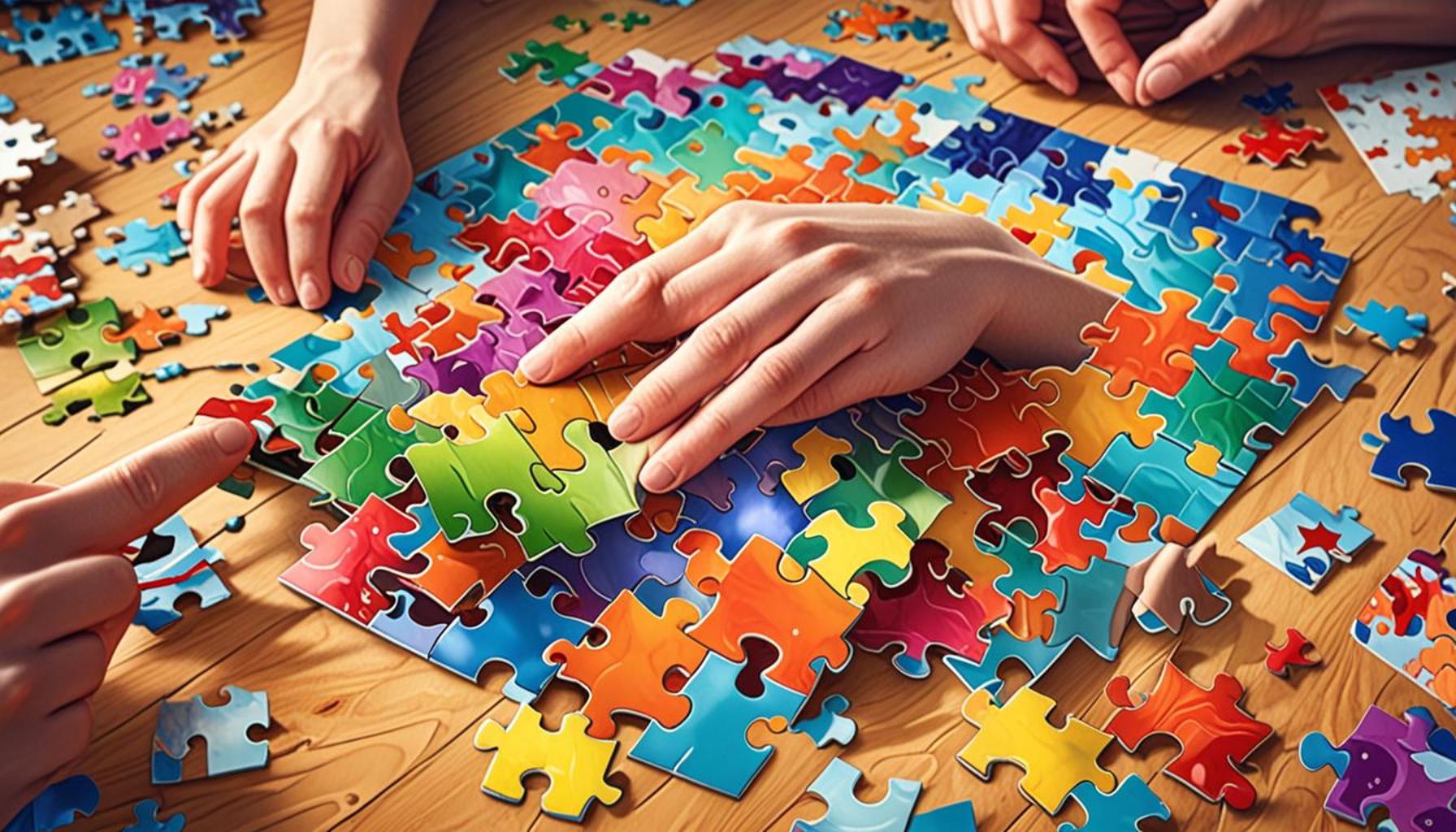
While many people often associate puzzle-solving with solitary engagement, collaborative puzzle activities can foster social connections and strengthen relationships. Participating in group puzzles, whether during a family game night or a friendly gathering, allows individuals to share problem-solving strategies and celebrate collective victories.
Moreover, research published in the journal Social Psychology Quarterly highlighted the benefits of teamwork while solving puzzles. The study revealed that group participants exhibited increased communication and cooperation skills, essential qualities that also enhance concentration and focus when working with others on joint tasks. Such interactions can promote a sense of belonging and support mental well-being, showcasing the multifaceted nature of puzzle engagement.
Stress Relief and Mindfulness: A Mental Retreat
Many individuals find that immersing themselves in puzzle-solving can serve as a form of stress relief. The act of concentrating on puzzles can divert attention away from daily stressors, providing a mental respite. This mindfulness aspect of puzzles enables individuals to experience reduced anxiety, which, in turn, can enhance cognitive function.
A study from the University of Birmingham revealed that participants who engaged in puzzles reported a significant decrease in cortisol levels (the primary stress hormone), contributing to their improved focus and memory performance. This demonstrates how the act of solving puzzles can create a flow state where the mind is actively engaged yet calm—a powerful combination for enhancing mental health.
With the multitude of benefits that puzzles offer, including improved cognitive flexibility, enhanced social bonds, and effective stress relief, the case for incorporating them into daily life becomes increasingly compelling. By making puzzle-solving a regular practice, individuals can harness these advantages to cultivate a more agile, resilient, and engaged mind.
DIVE DEEPER: Click here to discover more
Conclusion: The Multifaceted Benefits of Puzzle Solving
In conclusion, the exploration of the benefits of puzzles for memory and concentration unveils a captivating intersection of mental stimulation and personal growth. Engaging with puzzles not only promotes cognitive flexibility and enhances problem-solving abilities but also nurtures social connections and fosters stress relief. As evidenced by various studies, including those from reputable institutions like the University of California, Berkeley and the University of Birmingham, the positive impacts of puzzle-solving are extensive and far-reaching.
By integrating puzzles into daily routines, individuals can cultivate a more agile mind and develop essential skills that can improve their adaptability in both personal and professional settings. Furthermore, the collaborative aspect of puzzles encourages communication and cooperation, enhancing relationships and promoting a sense of community. Whether it’s a casual jigsaw during a family gathering or a challenging Sudoku session, the act of puzzle-solving offers not just engagement but also a pathway towards enhanced well-being.
Given the fast-paced and often chaotic nature of modern life, embracing puzzles as a tool for mental engagement may be a game-changer. The next time you find yourself seeking a productive break or a form of relaxation, consider reaching for a puzzle—it may just be the catalyst you need to sharpen your mind while enjoying a fulfilling experience. Therefore, let’s unravel the myriad benefits of puzzles and make them an intrinsic part of our pursuit for cognitive excellence.